Amidinium
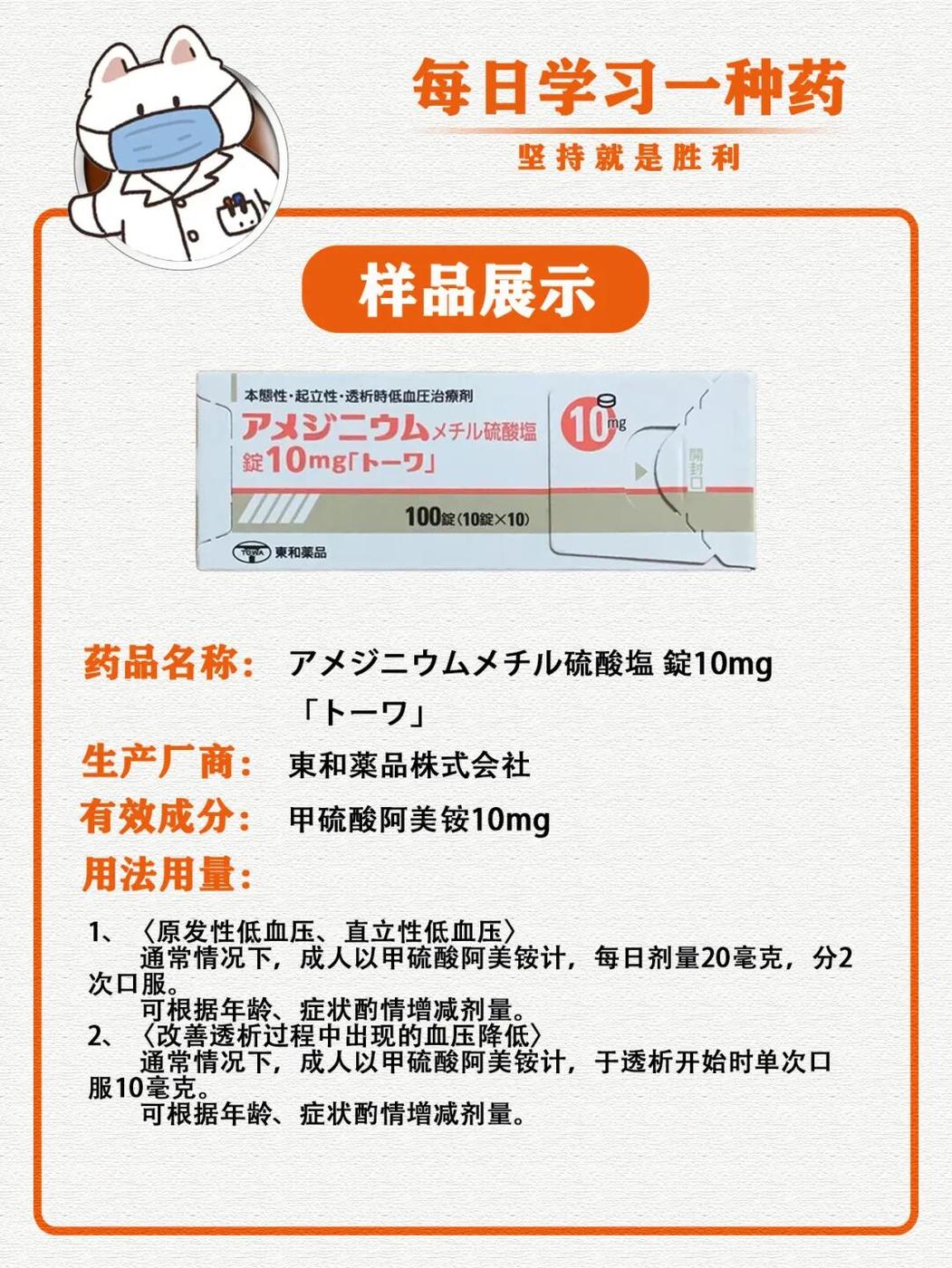
日本語原題:アメジニウムメチル硫酸塩 錠10mg「トーワ」
10mg of amethenium methyl sulfate.
Source images
2 imagesThe artwork keeps its original Japanese/Chinese lettering. Open “Text in this image” under a picture to read what it says in your language (machine-read, may contain errors).
Text in this image machine-read · may contain errors
Epistatic ointment for dialysis hypotension Tablets 10mg-] 100 ingots (10 ingots ×10) Drug Name: Amethenium methyl sulfate tablets 10mg Manufacturer: Towa Pharmaceutical Co., Ltd Active ingredients: Ammonium methylsulfate 10mg Dosage and administration: 1. "Primary Hypotension, Orthostatic Hypotension" Typically, adults use ammonium methylsulfate at a daily dose of 20 mg divided into 2 doses Next is oral administration. Dosage can be adjusted according to age and symptoms (Improves blood pressure reduction during dialysis) Typically, adults are measured as ammonium methylsulfate, with a single oral session at the start of dialysis Take 10 mg. Dosage can be adjusted according to age and symptoms.
本慰性·起立性·透析时低血压治擦剂 锭10mg-] 100锭(10锭×10) 药品名称: アメジニウムメチル硫酸塩錠 10mg 生产厂商: 东和藥品株式会社 有效成分: 甲硫酸阿美铵10mg 用法用量: 1、《原发性低血压、直立性低血压) 通常情况下,成人以甲硫酸阿美铵计,每日剂量20毫克,分2 次口服。 可根据年龄、症状情增减剂量 (改善透析过程中出现的血压降低) 通常情况下,成人以甲硫酸阿美铵计,于透析开始时单次口 服10毫克。 可根据年龄、症状酌情增减剂量。
Epistatic ointment for dialysis hypotension Tablets 10mg-] 100 ingots (10 ingots ×10) Drug Name: Amethenium methyl sulfate tablets 10mg Manufacturer: Towa Pharmaceutical Co., Ltd Active ingr…
Text in this image machine-read · may contain errors
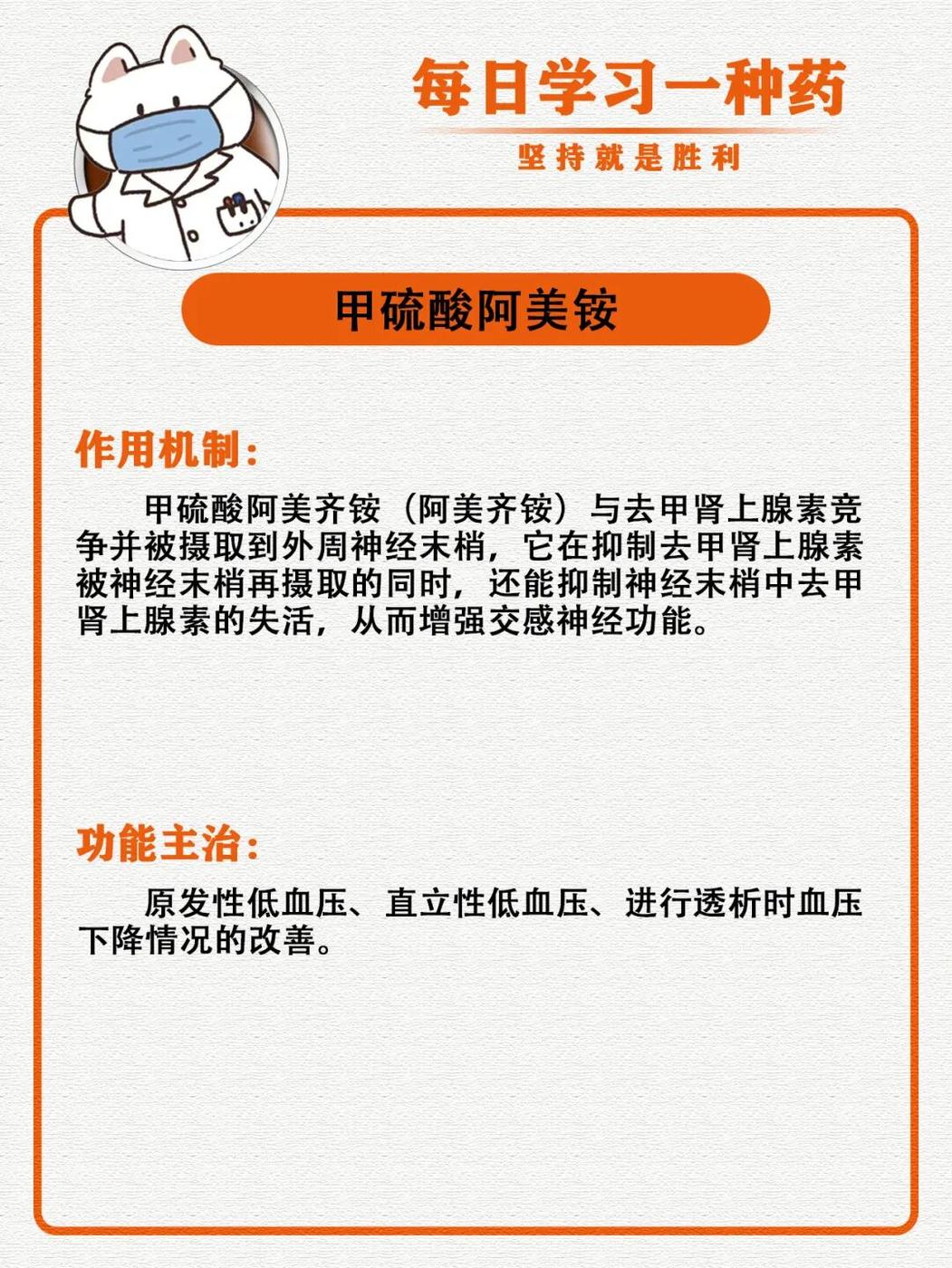
Ammonium methylsulfate Mechanism of action: Amethylmonium mesylate (ammonium mesylate) competes with norepinephrine It is also uptaken by peripheral nerve endings, which inhibit norepinephrine While reuptake by nerve endings, it can also inhibit nail removal in the nerve endings Inactivation of adrenaline, thereby enhancing sympathetic nervous system function. Functions and indications: Primary hypotension, orthostatic hypotension, blood pressure during dialysis Improvement in the decline.
甲硫酸阿美铵 作用机制: 甲硫酸阿美齐铵(阿美齐铵)与去甲肾上腺素竞 争并被摄取到外周神经未梢,它在抑制去甲肾上腺素 被神经末梢再摄取的同时,还能抑制神经未梢中去甲 肾上腺素的失活,从而增强交感神经功能。 功能主治: 原发性低血压、直立性低血压、进行透析时血压 下降情况的改善。
Ammonium methylsulfate Mechanism of action: Amethylmonium mesylate (ammonium mesylate) competes with norepinephrine It is also uptaken by peripheral nerve endings, which inhibit norepinephri…