Rebamipide
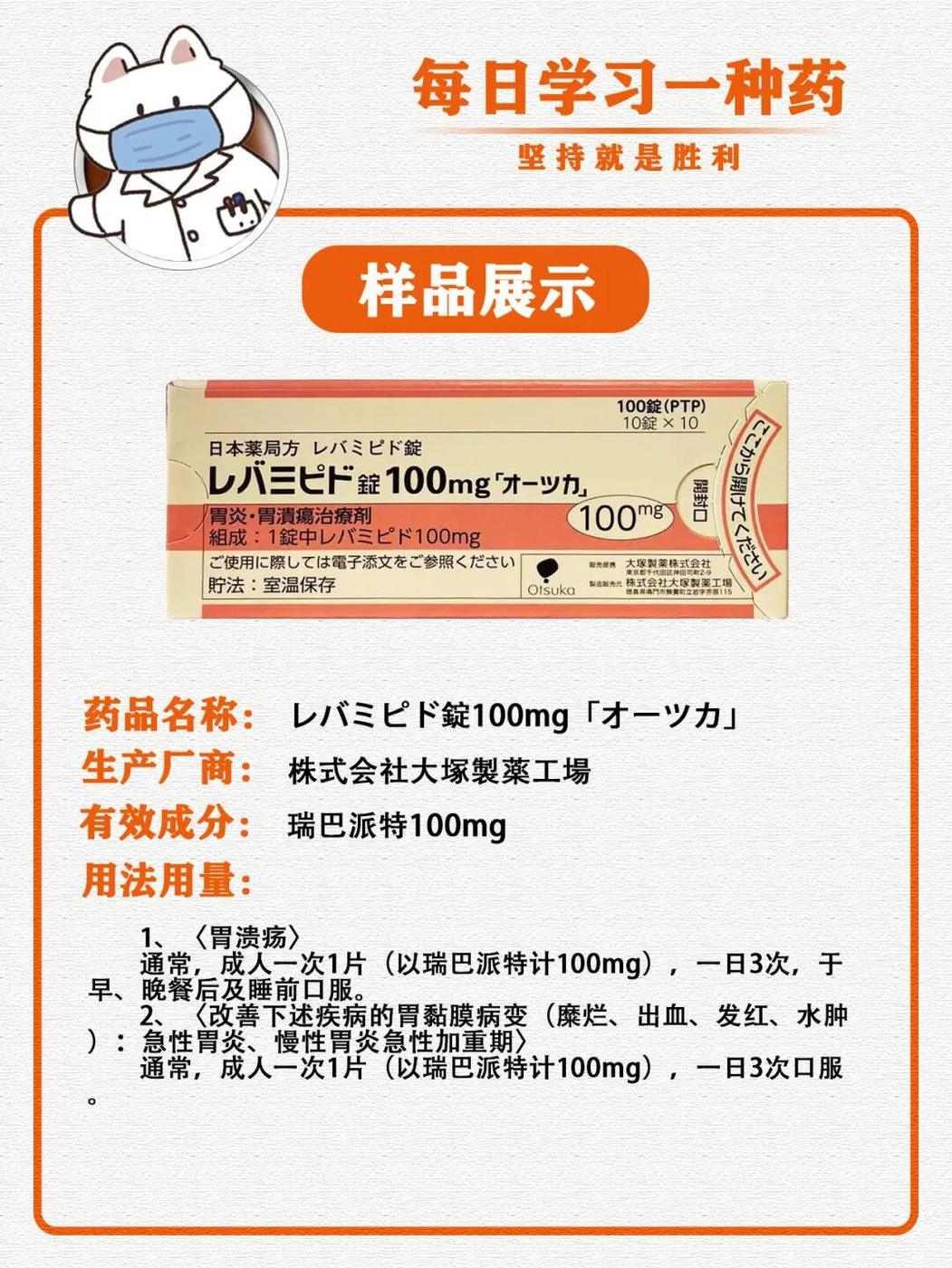
日本語原題:レバミピド錠100mg「オーツカ」
Each tablet contains 100mg of Rebamipido.
Source images
3 imagesThe artwork keeps its original Japanese/Chinese lettering. Open “Text in this image” under a picture to read what it says in your language (machine-read, may contain errors).
Text in this image machine-read · may contain errors
100(PTP) 10×10 Japanese Pharmacopoeia Lebamipid Tablets L837 F tablets 100mg for one year 100mg Gastritis and gastric ulcer treatment agents Composition: 1 tablet of 100ml Levamipide Please refer to the electronic attachment when using it Method: Store at room temperature Otsuka Drug Name: Levamipido Tablets 100mg "Okka" Manufacturer: # Active ingredients: Rebapater 100mg Dosage and administration: Typically, adults take one tablet per dose (calculated as 100mg of rebapater), three times a day, at Take orally in the morning, after dinner, and before bedtime. 2. Improve gastric mucosal lesions (erosion, bleeding, redness, edema) in the following conditions : Acute gastritis, acute exacerbation phase of chronic gastritis" Typically, adults take 1 tablet per dose (100mg of rebapater), three times a day
100(PTP) 10×10 日本薬局方レバミピド錠 L八三七F锭100mg一岁 100mg 胃炎·胃溃疡治療劑 組成 : 1 錠中レバミピド 100m ご使用に際しては電子添文をご参照ください 法:室温保存 Otsuka 药品名称: レバミピド錠 100mg 「オーッカ」 生产厂商:# 有效成分: 瑞巴派特100mg 用法用量: 通常,成人一次1片(以瑞巴派特计100mg),一日3次,于 早、晚餐后及睡前口服。 2、改善下述疾病的胃黏膜病变(糜烂、出血、发红、水肿 :急性胃炎、慢性胃炎急性加重期》 通常,成人一次1片(以瑞巴派特计100mg),一日3次口服
100(PTP) 10×10 Japanese Pharmacopoeia Lebamipid Tablets L837 F tablets 100mg for one year 100mg Gastritis and gastric ulcer treatment agents Composition: 1 tablet of 100ml Levamipide Please …
Text in this image machine-read · may contain errors
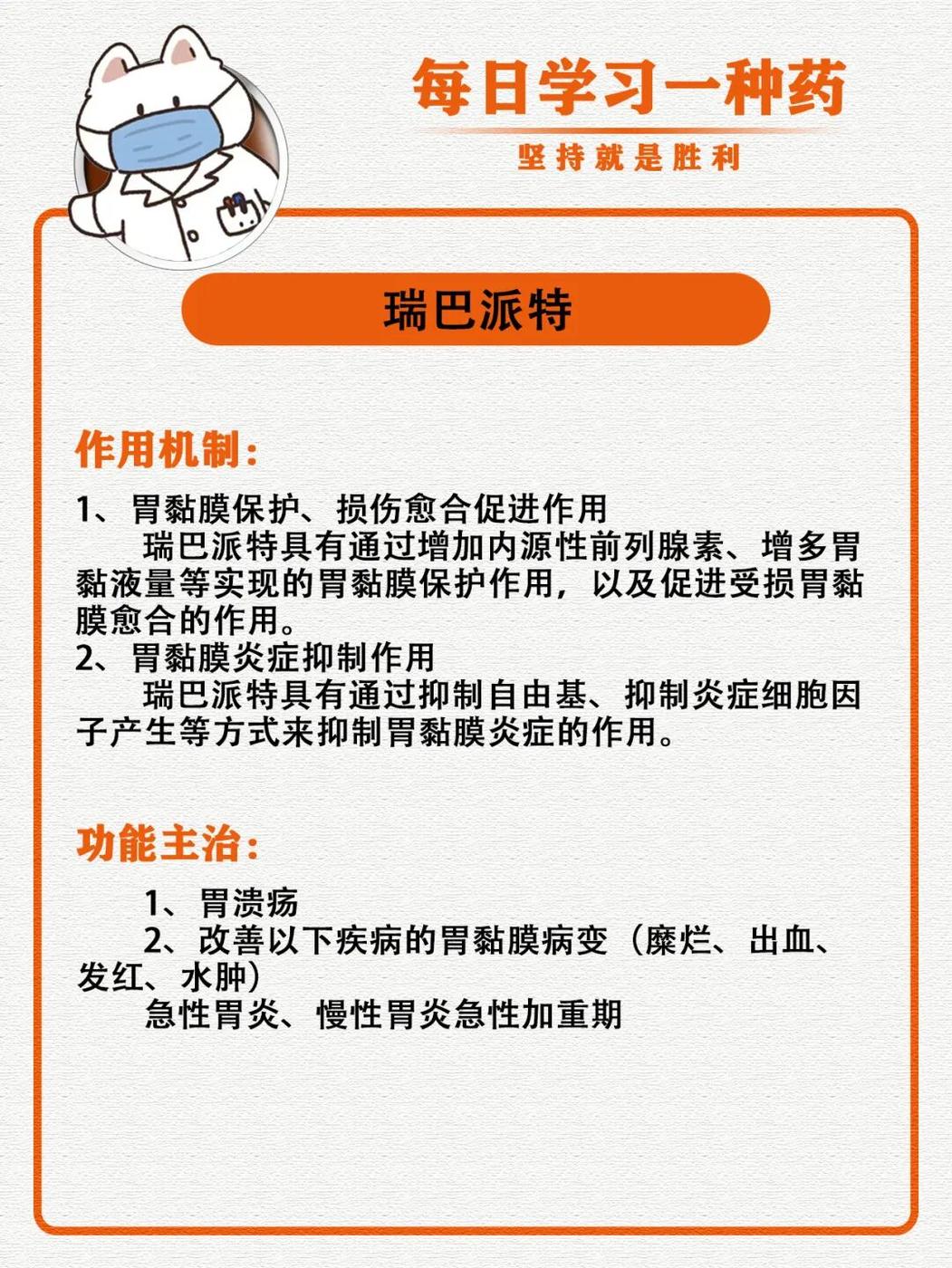
Mechanism of action: 1. Protects the gastric mucosa and promotes injury healing Rebapiter works by increasing endogenous prostaglandins and increasing stomach swelling mucus volume and other protective effects of the gastric mucosa and promoting damage to gastric mucosa Membrane healing effect. 2. Anti-inflammatory effect of the gastric mucosa Rebapite works by inhibiting free radicals and suppressing inflammatory cells and other methods to inhibit gastric mucosal inflammation. Functions and indications: 1. Gastric ulcer 2. Improve gastric mucosal lesions (erosion, bleeding, Redness and swelling) Acute gastritis and chronic gastritis during the acute exacerbation phase Reba Pat
作用机制: 1、胃黏膜保护、损伤愈合促进作用 瑞巴派特具有通过增加内源性前列腺素、增多胃 黏液量等实现的胃黏膜保护作用,以及促进受损胃黏 膜愈合的作用。 2、胃黏膜炎症抑制作用 瑞巴派特具有通过抑制自由基、抑制炎症细胞因 子产生等方式来抑制胃黏膜炎症的作用。 功能主治: 1、胃溃疡 2、改善以下疾病的胃黏膜病变(糜烂、出血、 发红、水肿) 急性胃炎、慢性胃炎急性加重期 瑞巴派特
Mechanism of action: 1. Protects the gastric mucosa and promotes injury healing Rebapiter works by increasing endogenous prostaglandins and increasing stomach swelling mucus volume and other…