Placental Villus Hydrolysate
日本語原題:メルスモン
100mg of water-soluble material from placental villi degradation products (components derived from human placenta).
Source images
2 imagesThe artwork keeps its original Japanese/Chinese lettering. Open “Text in this image” under a picture to read what it says in your language (machine-read, may contain errors).
Text in this image machine-read · may contain errors
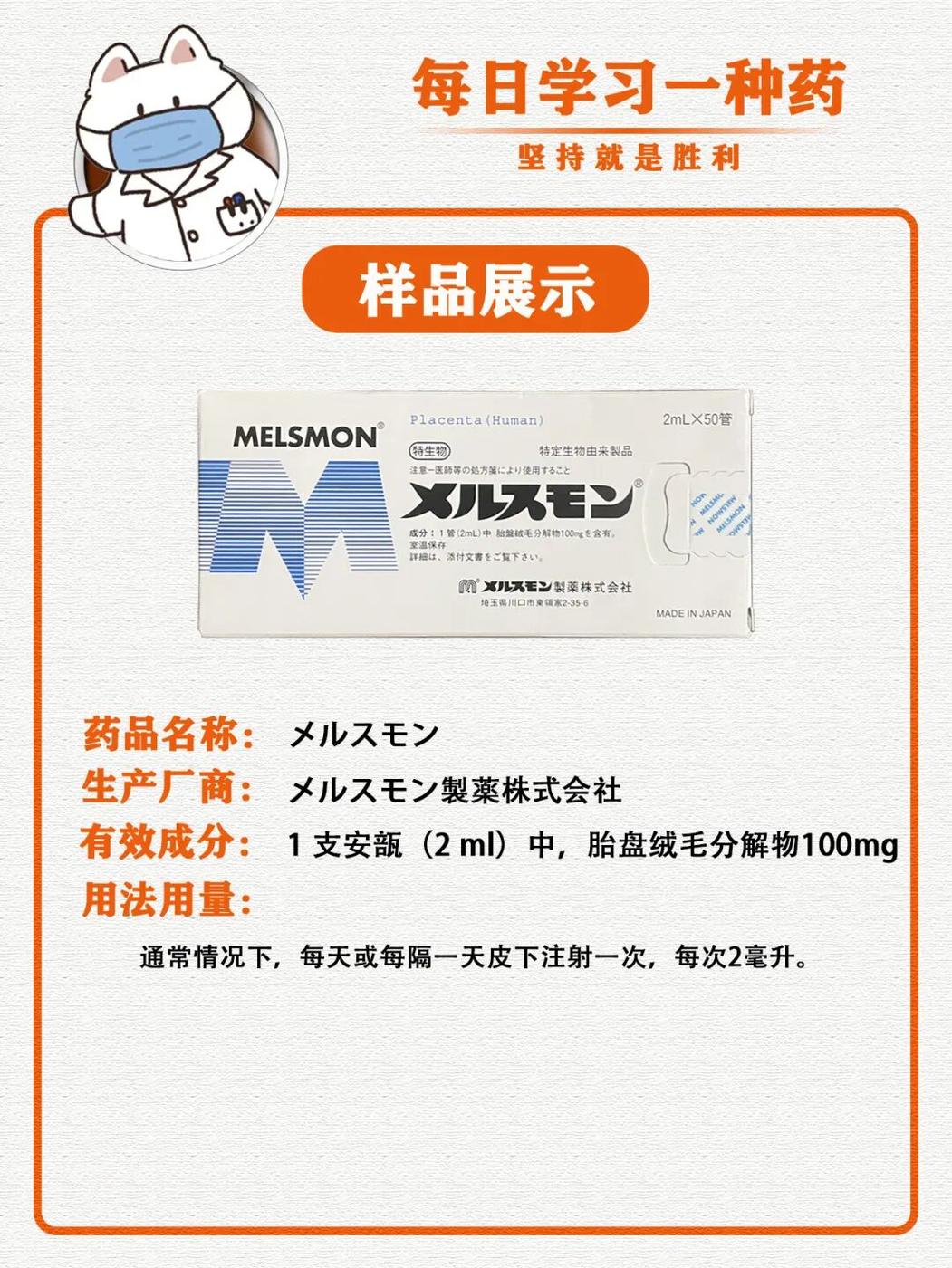
Placenta(Human) 2mLX50 tube MELSMON Products derived from specified biological organisms Ingredients: 1 tube (2mL) of 100mg of Sticky Woolly Decomposition contains: 2-35-6 Kasaku, Tamadai Kawaguchi City MADEINJAPAN Drug Name: Manufacturer: × Youmo Pharmaceutical Co., Ltd Active ingredient: 1 Zhi'an (2ml) contains 100mg of placental villi degradation Dosage and administration: Typically, 2 ml is injected subcutaneously once daily or every other day.
Placenta(Human) 2mLX50管 MELSMON 特定生物由来製品 成分:1管(2mL)中粘盆披毛分解物100mg走含有: 玉第川口市享锁家2-35-6 MADEINJAPAN 药品名称: 生产厂商:×儿又毛製藥株式会社 有效成分:1支安(2ml)中,胎盘绒毛分解物100mg 用法用量: 通常情况下,每天或每隔一天皮下注射一次,每次2毫升。
Placenta(Human) 2mLX50 tube MELSMON Products derived from specified biological organisms Ingredients: 1 tube (2mL) of 100mg of Sticky Woolly Decomposition contains: 2-35-6 Kasaku, Tamadai Ka…
Text in this image machine-read · may contain errors
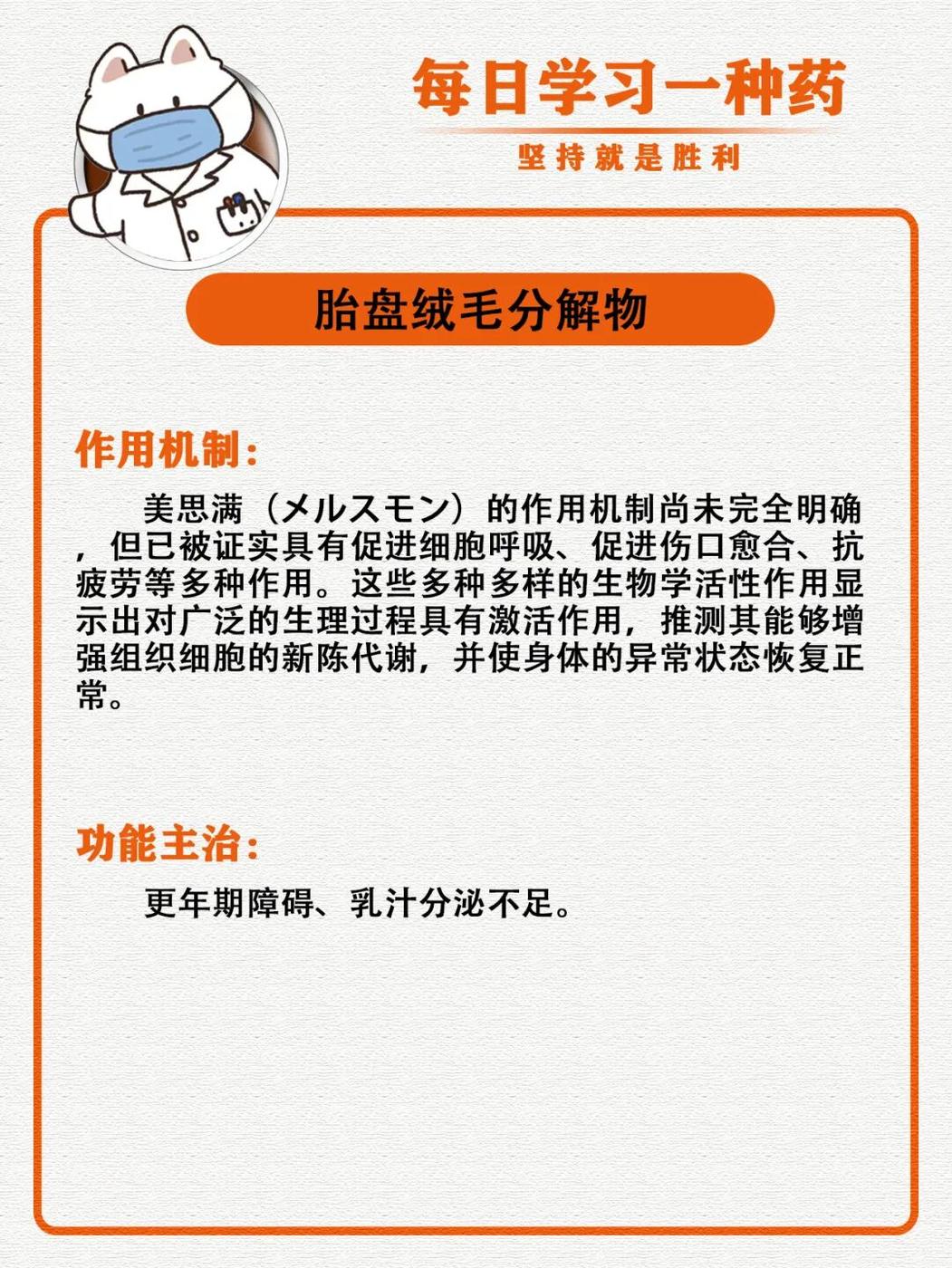
Placental villi degradation Mechanism of action: The mechanism of action of Meisman (× Er You Mao) is not yet fully understood However, it has been proven to promote cellular respiration, aid wound healing, and have anti-inflammatory effects Fatigue and other effects. These diverse biological activities are evident It has shown activation effects on a wide range of physiological processes, suggesting it can increase it Strengthens the metabolism of tissue cells and restores the body's abnormal state to normal Functions and indications: Menopausal disorders and insufficient milk secretion.
胎盘绒毛分解物 作用机制: 美思满(×儿又毛)的作用机制尚未完全明确 但已被证实具有促进细胞呼吸、促进伤口愈合、抗 疲劳等多种作用。这些多种多样的生物学活性作用显 示出对广泛的生理过程具有激活作用,推测其能够增 强组织细胞的新陈代谢,并使身体的异常状态恢复正 功能主治: 更年期障碍、乳汁分泌不足。
Placental villi degradation Mechanism of action: The mechanism of action of Meisman (× Er You Mao) is not yet fully understood However, it has been proven to promote cellular respiration, ai…