Digestive · DIGESTIVE

Omeprazole

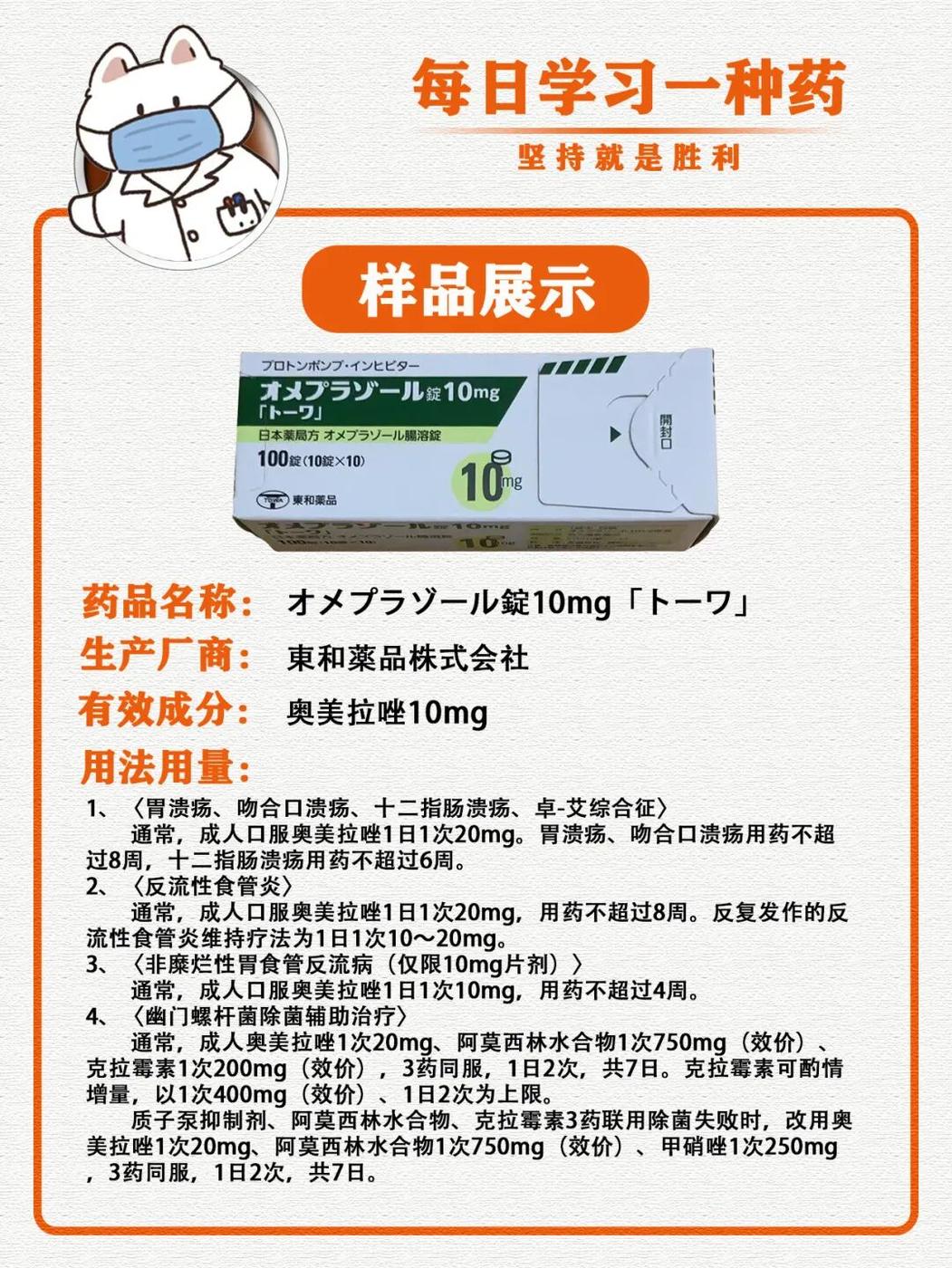
日本語原題:オメプラゾール錠10mg「トーワ」

Published2026-02-27 09:01 Makerトーワ FormTablet Content9 sections / 2 images
Ingredients / strength:
Nippon Dome omeprazole 10mg.
English translation of the Japanese package insert is the main text; the Japanese original is shown alongside for verification. Use the language menu (top right) to read the page in another language. This site is for reference only — consult a doctor or pharmacist before use.
Section 1 · 01
English translation
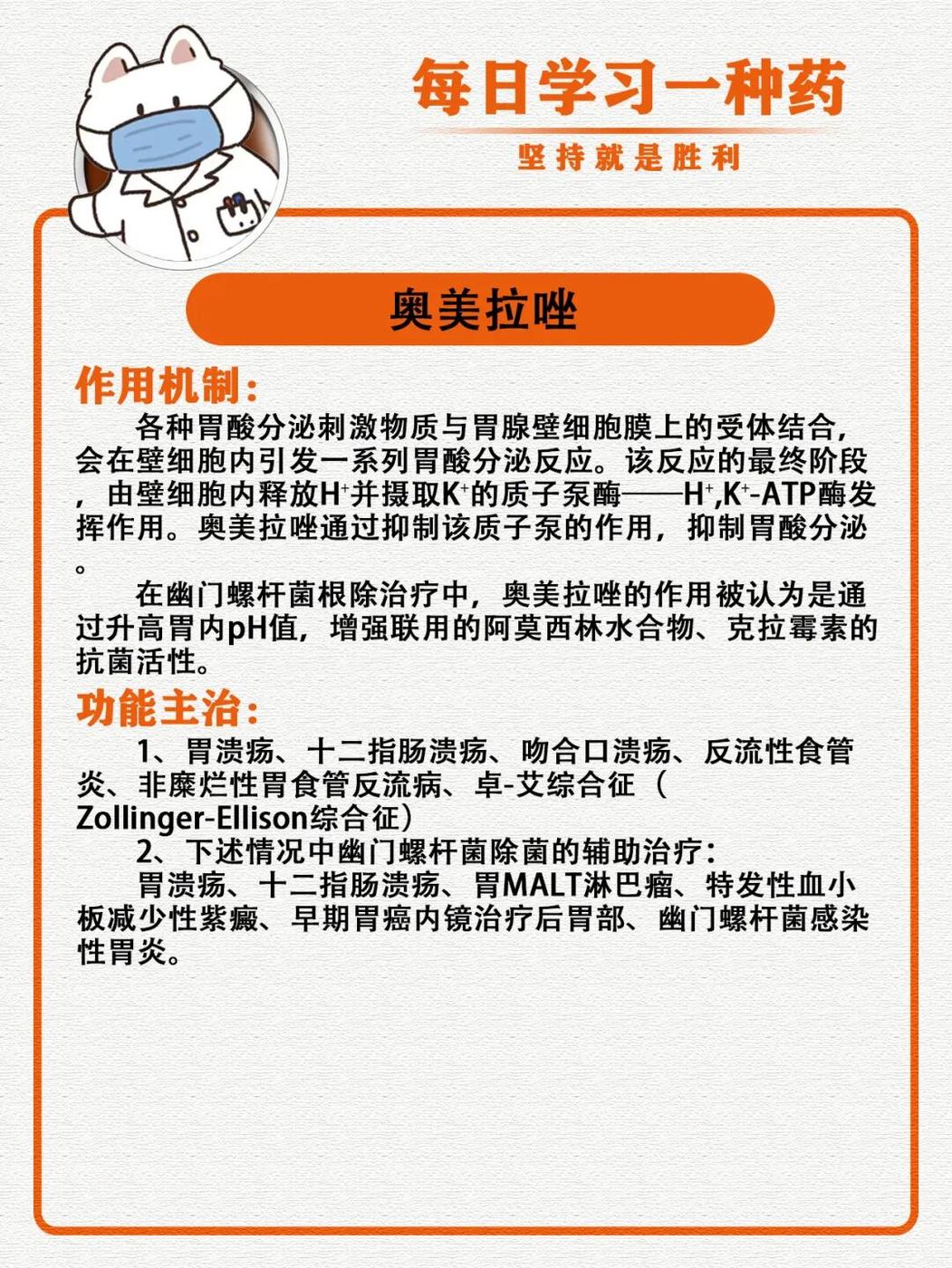
Feature Description When various acid-secreting stimulants bind to receptors located on the cell membrane of parietal cells of the gastric gland, a series of gastric acid secretion reactions occur within the parietal cells. In the final stage of this reaction, enzymes called proton pumps called H+ and K+-ATPase release H+ from inside the wall cells and take in K+ instead. Omeprazole suppresses gastric acid secretion by inhibiting the function of this proton pump. The role of omeprazole in Helicobacter pylori eradication therapy is thought to be to increase gastric pH, thereby enhancing the antibacterial activity of amoxicillin hydrate and clarithromycin concomitantly.
Section 2 · 02
English translation
Specifications 100 tablets [10 tablets×10: PTP, with desiccant].
Section 3 · 03
English translation
Characteristics White~grayish-white enteric-coated film-coated tablets.
Section 4 · 04
English translation
Ingredient Information Active ingredient per tablet: Japanese Dome Omeprazole 10mg. Additives: lactose hydrate, sodium lauryl sulfate, hydroxypropyl cellulose, low-substitution hydroxypropyl cellulose, magnesium hydroxide, magnesium stearate, hypromellose phthalate, synthetic hydrotalsite, talc, titanium dioxide, cetanol, polyvinyl alcohol (partial saurin), maklogol 6000, and one other ingredient.
Section 5 · 05
English translation
Indications 1. Gastric ulcer, duodenal ulcer, anastomotic ulcer, reflux esophagitis, non-erosive gastroesophageal reflux disease, Zollinger-Ellison syndrome 2. Assistance in the removal of Helicobacter pylori in the following cases: Gastric ulcers, duodenal ulcers, gastric MALT lymphoma, immune thrombocytopenia, and early gastric cancer after endoscopic treatment for stomach and Helicobacter pylori gastritis.
Section 6 · 06
English translation
Dosage and Administration 1. "Gastric ulcer, anastomotic ulcer, duodenal ulcer, Zollinger-Ellison syndrome" Typically, adults receive an oral dose of 20 mg once daily as omeprazole. Usually, administration is limited to 8 weeks for gastric ulcers and anastomotic ulcers, and up to 6 weeks for duodenal ulcers. 2. "Reflux Esophagitis" Typically, adults receive an oral dose of 20 mg once daily as omeprazole. Normally, administration is limited to up to 8 weeks. Furthermore, in maintenance therapy for reflux esophagitis with repeated recurrences and flare-ups, 10~20 mg is administered orally once daily. 3. Non-erosive gastroesophageal reflux disease (only 10mg tablets) Typically, adults are given 10 mg orally once daily as omeprazole. Normally, administration is limited to up to 4 weeks. 4. Assistance in Sterilizing Helicobacter pylori Typically, adults receive three oral doses simultaneously: 20 mg of omeprazole, 750 mg of amoxicillin hydrate (potency), and 200 mg of clarithromycin twice daily for 7 days. Clarithromycin can be increased as needed. However, the maximum is 400mg (potency) twice a day. If the eradication of Helicobacter pylori by triple administration of proton pump inhibitor, amoxicillin hydrate, and clarithromycin is unsuccessful, alternative treatments typically include three doses simultaneously twice daily for adults: 20 mg of omeprazole per dose, 750 mg of amoxicillin hydrate (potency) per dose, and 250 mg of metronidazole twice daily. Administered orally for 7 days.
Section 7 · 07
English translation
Notes 1. "Common Efficacy" Pay attention to blood imaging, liver function, kidney function, and other factors. 2. "Reflux Esophagitis" Maintenance therapy for reflux esophagitis should be administered to patients who repeatedly experience relapse and flare-up, and care should be taken not to administer it to patients who do not normally require maintenance therapy. Also, during maintenance therapy, it is desirable to conduct thorough observation such as regular endoscopic examinations. Please pay close attention to the following points. (1) Choose the maintenance therapy dose considering a history of recurrence, severity of symptoms, and other factors. (2) If it is judged that the remission is well maintained, consider stopping the medication or reducing the dose. (3) It is desirable to regularly perform tests on liver function, kidney function, blood imaging, and other tests. 3. Non-erosive Gastroesophageal Reflux Disease When administering, confirm through medical interview that repeated acid reflux symptoms such as heartburn or gastric acid reflux flu (at least 2 days per week) are present before administration. Please note that administration of this drug may mask symptoms caused by malignant tumors such as gastric and esophageal cancer, as well as other gastrointestinal diseases, so confirm by endoscopy or other examinations that these diseases are not present.
Section 8 · 08
English translation
Side Effects 1. Shock, anaphylaxis (both with unknown frequency) Shock and anaphylaxis (angioedema, bronchospasm, etc.) may occur. 2. Pancytopenia, agranulocytosis, hemolytic anemia, thrombocytopenia (all unknown frequency) 3. Fulminant hepatitis, liver dysfunction, jaundice, liver failure (all frequency unknown) 4. Toxic Epidermal Necrolysis (TEN), Stevens-Johnson syndrome (both frequency unknown) 5. Visual impairment (frequency unknown) 6. Interstitial nephritis, acute kidney injury (both frequency unknown) Pay attention to kidney function test values (BUN, creatinine, etc.). 7. Hyponatremia (frequency unknown) 8. Interstitial pneumonia (frequency unknown) If cough, difficulty breathing, fever, abnormal lung sounds (twisted sounds), or similar abnormalities are observed, promptly undergo chest X-ray, chest CT, or other examinations. If interstitial pneumonia is suspected, discontinue administration and take appropriate measures such as administering corticosteroids. 9. Rhabdomyolysis (frequency unknown) Muscle pain, weakness, increased CK (Cough Control), and increased myoglobin in blood and urine may occur. 10. Confused state (frequency unknown) Delirium, abnormal behavior, disorientation, hallucinations, anxiety, impatience, aggression, and other symptoms may appear. 11. Other side effects (1) 〈Gastric ulcer, duodenal ulcer, anastomotic ulcer, reflux esophagitis, nonerosive gastroesophageal reflux disease, Zollinger-Ellison syndrome〉 (1) Hypersensitivities: rash, urticaria, erythema multiforme, photosensitivity, itching. (2) Digestive system: diarrhea and soft stools, constipation, nausea, vomiting, bloating, abdominal pain, stomatitis, glossitis, microscopic colitis (collagenous colitis, lymphocytic colitis), abdominal bloating, candidiasis, dry mouth. (3) Liver: Elevated levels of AST, ALT, AL-P, γ-GTP, and LDH. (4) Blood: decreased white blood cell count, decreased platelet count, anemia. (5) Neuropsychiatric system: headache, drowsiness, numbness, dizziness, tremors, drowsiness, insomnia, abnormal sensations, depressive states. (6) Others: fever, hair loss, fatigue, joint pain, frequent urination, taste disturbances, palpitations, menstrual irregularities, muscle pain, sweating, muscle weakness, hypomagnesemia, blurred vision, edema, gynecomastia, and increased BUN, creatinine, uric acid, triglycerides, serum potassium, and total cholesterol. (2) Assistance in Sterilizing Helicobacter pylori (1) Hypersensitivity: rash. (2) Digestive system: diarrhea and loose stools (33.4%), taste disturbances (10.5%), stomatitis, abdominal pain, esophagitis, nausea, abdominal bloating, constipation, glossitis, dry mouth, duodenitis. (3) Liver: increased AST, abnormal liver function, increased ALT, increased Al-P, increased bilirubin, elevated LDH. (4) Blood: increased eosinophil count, decreased platelet count, anemia, increased white blood cell count, abnormal white blood cell fraction. (5) Neuropsychiatric system: headache, numbness, dizziness, sleep disturbances. (6) Others: positive urine glucose, urine protein positive, increased uric acid, elevated total cholesterol, QT prolongation, fever, fatigue, candidiasis, palpitations, fog-blurred vision.
Section 9 · 09
English translation
taboo 1. Patients with a history of hypersensitivity to any component of this drug 2. Patients receiving rilpivirin hydrochloride

Source images

2 images

Need help sourcing Japanese medicines or OEM production?

💬