Neuro & Psychiatric · NERVOUS

Zolmitriptan

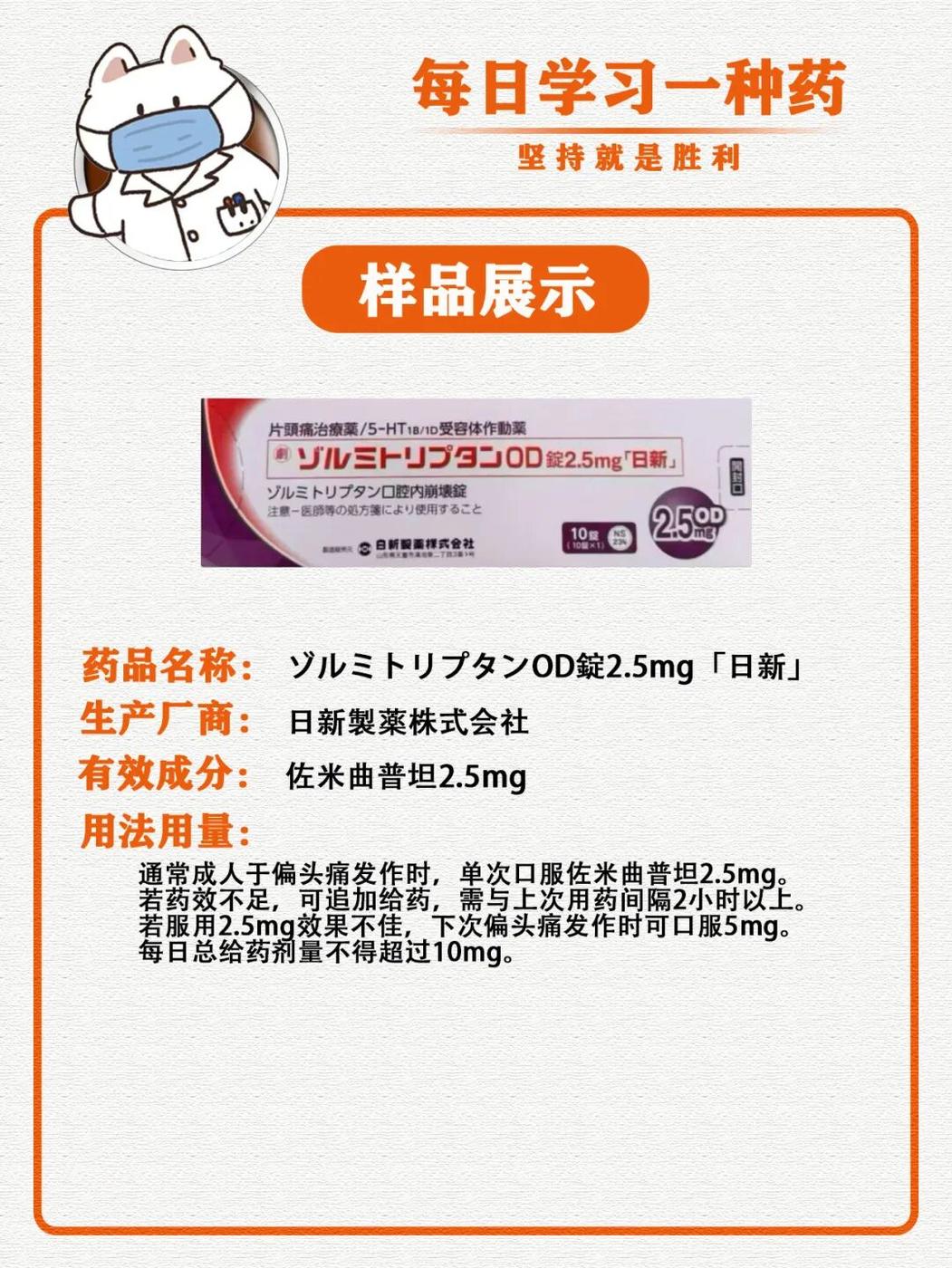
日本語原題:ゾルミトリプタンOD錠2.5mg「日新」

Published2026-04-26 10:33 Maker日新 FormTablet Content9 sections / 2 images
Ingredients / strength:
Each tablet contains 2.5 mg of zolmitriptan.
English translation of the Japanese package insert is the main text; the Japanese original is shown alongside for verification. Use the language menu (top right) to read the page in another language. This site is for reference only — consult a doctor or pharmacist before use.
Section 1 · 01
English translation
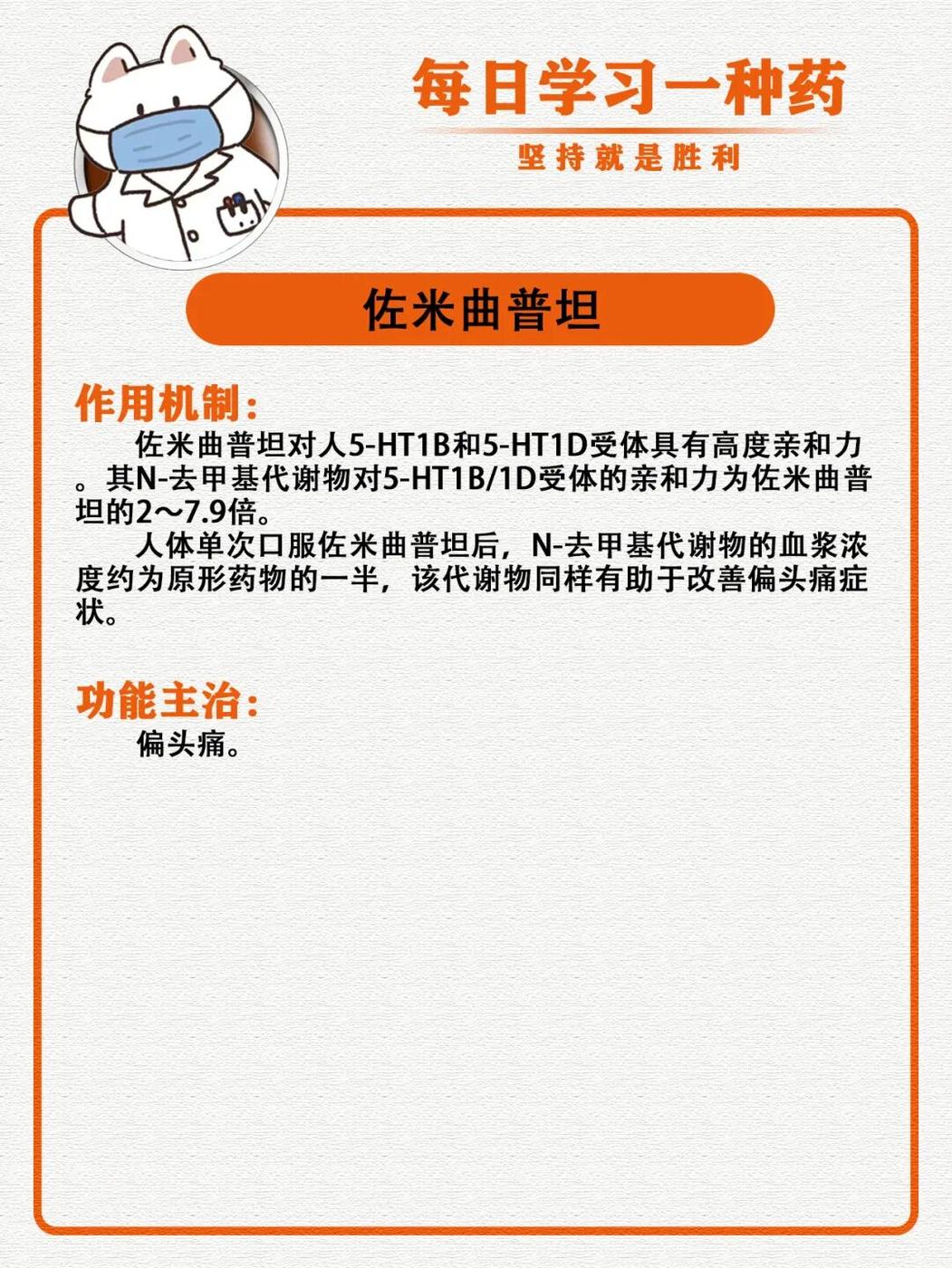
Feature Description Zolmitriptan exhibits high affinity for human 5-HT1B and 5-HT1D receptors. The N-demethyl form exhibits 5-HT1B/1D receptor affinity, which is 2~7.9 times higher than that of zolmitriptan. When solmitriptan was administered orally once to humans, the plasma concentration of N-demethyl forms was about half that of the unchanged form, and N-demethyl bodies are also thought to contribute to migraine relief.
Section 2 · 02
English translation
Specifications 10 tablets [10 tablets (PTP) ×1, with desiccant].
Section 3 · 03
English translation
Characteristics White tablets with a faint orange scent.
Section 4 · 04
English translation
Ingredient Information Active ingredient: 2.5mg of zolmitriptan per tablet. Additives: crystalline cellulose, D-mannitol, anhydrous silica, synthetic aluminum silicate, hydroxypropyl starch, crospovidone, hydroxypropyl cellulose, aspartame (L-phenylalanine compound), fragrance, extracted tocopherol, magnesium stearate.
Section 5 · 05
English translation
Migraine.
Section 6 · 06
English translation
Dosage and Administration Typically, adults are given 2.5 mg orally as zolmitriptan at the onset of migraine headaches. If the effect is insufficient, additional doses may be given, but at least 2 hours after the previous dose. If oral administration of 2.5 mg is insufficient, 5 mg can be administered orally starting from the next migraine attack. However, the total daily dose should be kept within 10 mg.
Section 7 · 07
English translation
Notes 1. Even in patients without cardiovascular diseases, severe heart disease can occur extremely rarely. In such cases, discontinue further administration and take appropriate measures. 2. Since headaches may worsen with triptan drugs containing this drug, if headache improvement is not observed, consider the possibility of headaches caused by drug overuse and take appropriate measures such as discontinuing administration. 3. Since migraines or drowsiness may occur due to administration of this drug, patients receiving this drug must be strictly advised not to engage in dangerous machinery operations such as driving cars.
Section 8 · 08
English translation
Side Effects 1. Anaphylactic shock, anaphylaxis (both with unknown frequency) 2. Ischemic heart disease-like symptoms including arrhythmia, angina, or myocardial infarction (frequency unknown) After administration, transient symptoms such as chest pain and chest tightness may occur (sometimes severe and affecting the head of the throat). If these symptoms are suspected to be ischemic heart disease, discontinue further administration and perform appropriate tests to check for ischemic heart disease. 3. Tachycardia (in WPW syndrome) (frequency unknown) Severe paroxysmal tachycardia, a typical symptom of WPW syndrome, has been observed in patients with a history of WPW syndrome who received this drug. 4. Headaches caused by drug overuse (frequency unknown) 5. Epileptic-like seizures (frequency unknown) 6. Other side effects (1) Hypersensitivity: hypersensitivity symptoms such as urticaria and angioedema. (2) Cardiovascular system: palpitations, hypertension, tachycardia, gastrointestinal ischemia or infarction (intestinal ischemia, intestinal obstruction, splenic infarction, etc.). (3) Digestive system: nausea, dry mouth, vomiting, abdominal pain, diarrhea, difficulty swallowing. (4) Neuropsychiatric system: drowsiness, dizziness, decreased sensory perception, hypersensitivity, abnormal sensations, headache. (5) Urinary system: frequent urination, polyuria, urgent urge to urinate. (6) Muscle and skeletal system: muscle weakness, muscle pain. (7) Others: weakness, heat sensation, heavy pressure, strangulation, pain, pressure, fatigue.
Section 9 · 09
English translation
taboo 1. Patients with a history of hypersensitivity to any component of this drug 2. Patients with a history of myocardial infarction, ischemic heart disease or its symptoms/signs, or patients with atypical angina (coronary artery spasm) [arrhythmia, angina, and severe ischemic heart disease-like symptoms including myocardial infarction may appear. ] 3. Patients with a history of cerebrovascular disorders or transient ischemic attacks [cerebrovascular disorders or transient ischemic attacks may occur. ] 4. Patients with peripheral vascular disorders [may worsen symptoms]. ] 5. Patients with uncontrolled hypertension [may cause transient blood pressure increases. ] 6. Patients receiving ergotamine, ergotamine derivative-containing preparations, or other 5-HT1B/1D receptor agonists 7. Currently administering monoamine oxidase inhibitors (MAO inhibitors), or Patients discontinued within 2 weeks

Source images

2 images

Need help sourcing Japanese medicines or OEM production?

💬