Cardiovascular · CARDIOVASCULAR

Clopidogrel

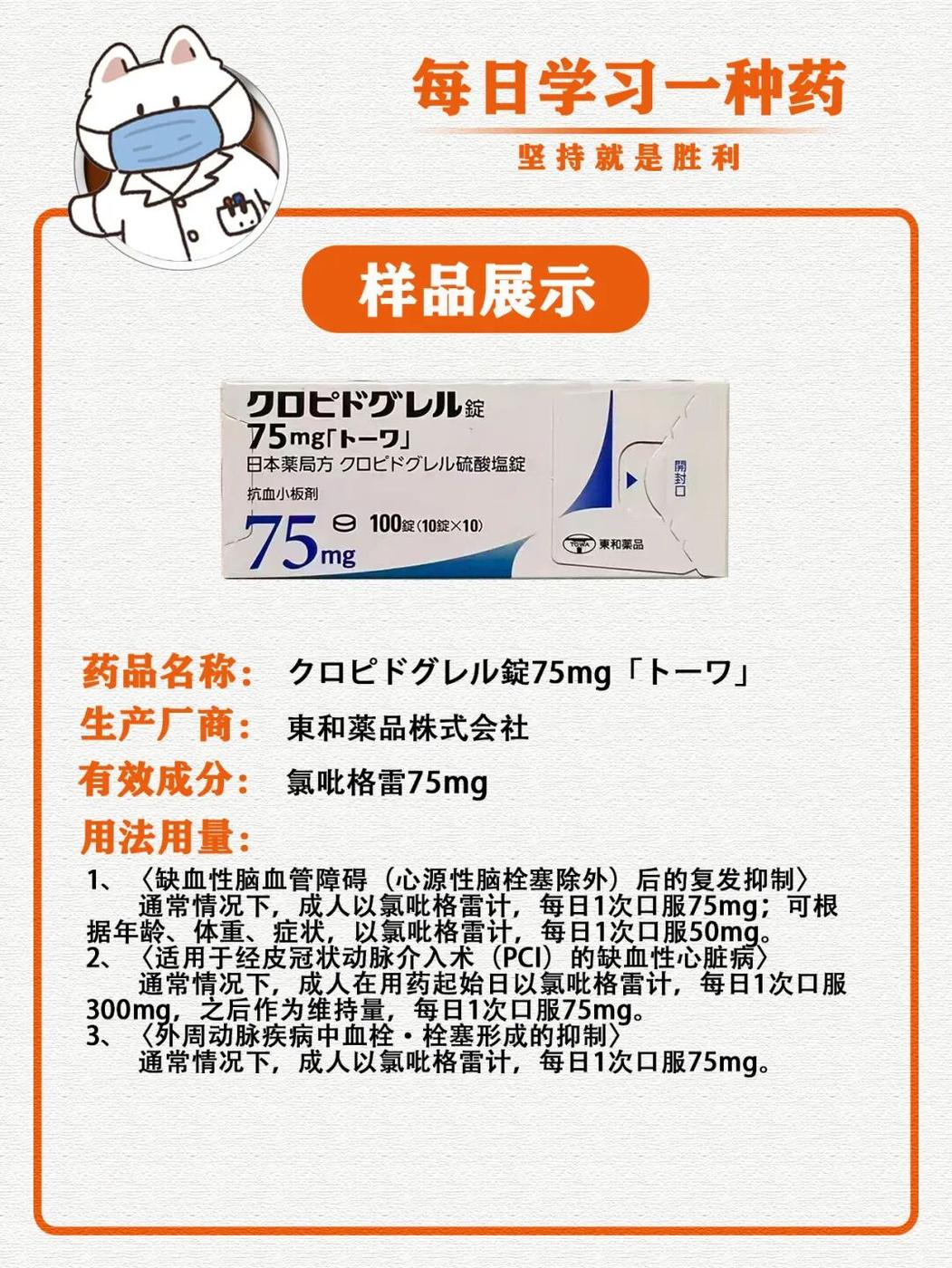
日本語原題:クロピドグレル錠75mg「トーワ」

Published2026-04-27 09:45 Makerトーワ FormTablet Content9 sections / 2 images
Ingredients / strength:
Japanese Bureau: Clopidogrel Sulfate 97.88mg (75mg as Clopidogrel).
English translation of the Japanese package insert is the main text; the Japanese original is shown alongside for verification. Use the language menu (top right) to read the page in another language. This site is for reference only — consult a doctor or pharmacist before use.
Section 1 · 01
English translation
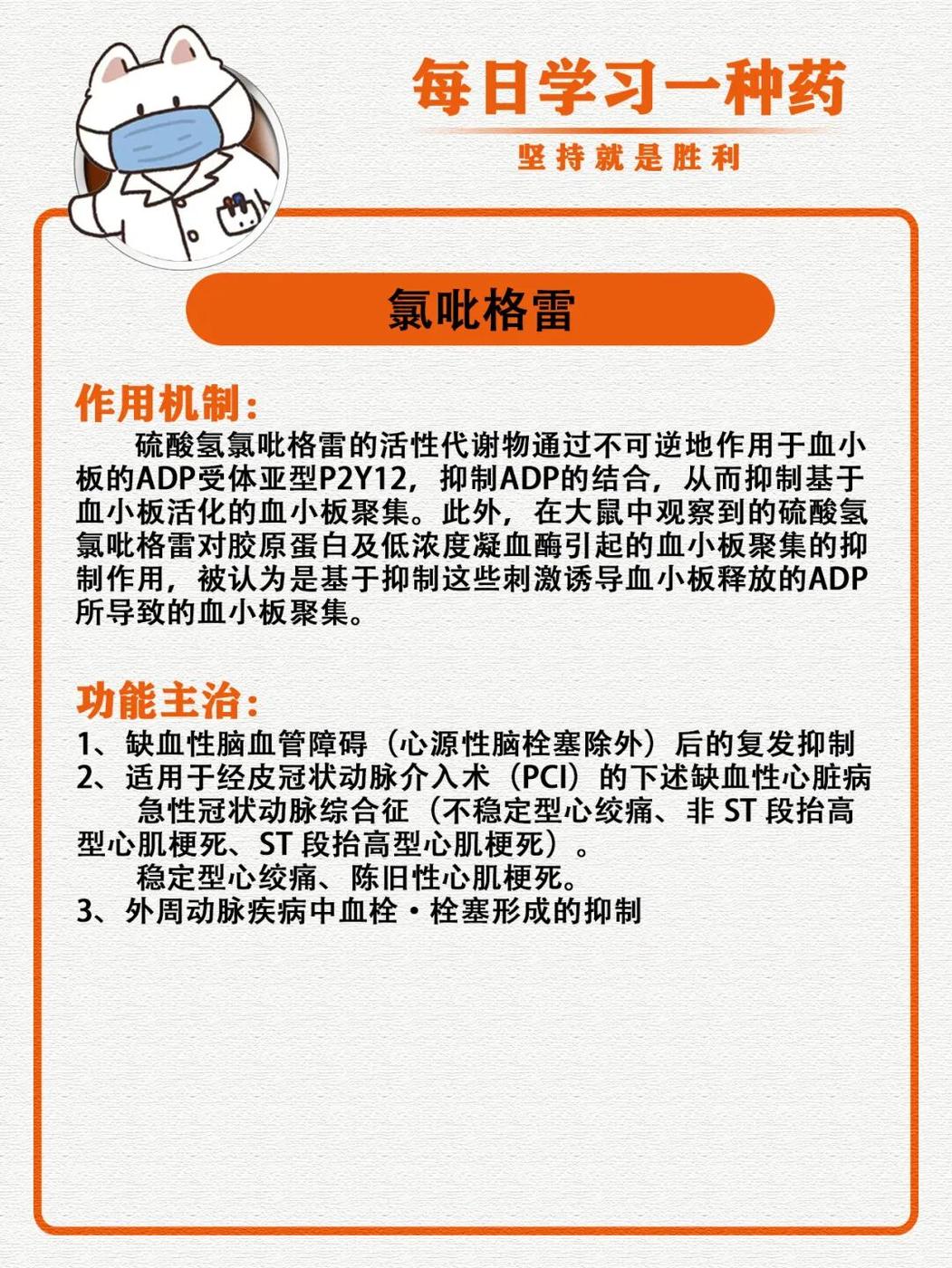
Feature Description The active metabolite of clopidogrel sulfate irreversibly acts on platelet ADP receptor subtype P2Y12, inhibiting ADP binding and thereby suppressing platelet aggregation based on platelet activation. Furthermore, the inhibitory effect of clopidogrel sulfate on platelet aggregation caused by collagen and low-concentration thrombin observed in rats is thought to be based on suppressing platelet aggregation caused by ADP released from platelets by these stimuli and is thought to be based on this.
Section 2 · 02
English translation
Specifications 100 tablets [10 tablets×10: PTP, with desiccant].
Section 3 · 03
English translation
Characteristics White film-coated locks.
Section 4 · 04
English translation
Ingredient Information Active ingredient per tablet: Nippon Clopidogrel Sulfate 97.88mg (75mg as Clopidogrel). Additives: lactose hydrate, hydroxypropyl cellulose, low-substitution hydroxypropyl cellulose, hydrogenated oil, hypromellose, talc, titanium oxide.
Section 5 · 05
English translation
Indications 1. Recurrence suppression after ischemic cerebrovascular injury (excluding cardiogenic cerebral embolism) 2. The following ischemic heart diseases for which percutaneous coronary angioplasty (PCI) is applied Acute coronary syndrome (unstable angina, non-ST-elevation myocardial infarction, ST-elevation myocardial infarction). Stabilize angina pectoris and chronic myocardial infarction. 3. Suppression of thrombosis and embolism formation in peripheral artery disease
Section 6 · 06
English translation
Dosage and Administration 1. "Recurrence Suppression After Ischemic Cerebrovascular Injury (excluding Cardiogenic Cerebral Embolism)" Typically, adults receive 75 mg of clopidogrel orally once daily, but depending on age, weight, and symptoms, 50 mg of clopidogrel is given orally once daily. 2. Ischemic heart disease for which percutaneous coronary angioplasty (PCI) is applied. Typically, adults receive 300 mg orally as clopidogrel once daily on the start date, followed by a maintenance dose of 75 mg orally once daily. 3. Suppression of thrombosis and embolism formation in peripheral artery disease. Typically, adults receive 75 mg of clopidogrel orally once daily.
Section 7 · 07
English translation
Notes 1. "Common Efficacy" (1) Serious side effects such as thrombotic thrombocytopenic purpura (TTP), agranulocytosis, and severe liver damage may occur; therefore, consider blood tests about once every two weeks for two months after starting administration. (2) In surgeries where platelet aggregation suppression by this drug is problematic, it is desirable to discontinue administration at least 14 days in advance. If sufficient withdrawal periods cannot be established, it has been reported that the risk of serious bleeding increases, so close observation is necessary. Additionally, in cases with high risk of thrombosis or embolism during the discontinuation period, appropriate measures to suppress onset should be taken. If readministration of this drug is necessary after surgery, confirm hemostasis at the surgical site before resuming. (3) Administer with caution to patients with persistent hypertension, and ensure adequate blood pressure control during administration. (4) In patients with ischemic cerebrovascular disease with a high risk of recurrence, combined with aspirin, the incidence of significant bleeding has been reported overseas compared to clopidogrel monotherapy. (5) If the risk of bleeding is considered high, consider stopping or reducing the body. (6) Acquired hemophilia (prolonged activation partial thromboplastin-time (aPTT) time, decreased factor VIII activity, etc.) may occur. If prolongation of aPTT or similar conditions is observed, regardless of bleeding, consider the possibility of acquired hemophilia and take appropriate measures such as coordinating with specialists. (7) Explain to patients that bleeding may be more likely than usual and advise them to contact their doctor if abnormal bleeding is observed. Also, when visiting other hospitals (departments), patients should be reminded to inform their doctors that they are taking this medication. 2. Ischemic heart disease for which percutaneous coronary angioplasty (PCI) is applied. Fully consider that loading dose administration (300 mg on the start date) and co-administration with aspirin may increase the risk of bleeding.
Section 8 · 08
English translation
Side Effects 1. Bleeding (intracranial hemorrhage such as cerebral hemorrhage (less than 1%), subdural hematoma (less than 0.1%), hematemesis (frequency unknown), phlegmic bleeding, gastrointestinal bleeding, fundus hemorrhage (all less than 1%), joint hematoma (less than 0.1%), abdominal hematoma (less than 0.1%), retroperitoneal hemorrhage (frequency unknown), etc.) Early symptoms of intracranial hemorrhage such as cerebral hemorrhage may include headache, nausea and vomiting, impaired consciousness, and hemiplegia. If clinical symptoms suggestive of bleeding are suspected, discontinue administration and immediately perform appropriate tests such as blood count. 2. Gastric and duodenal ulcers (frequency unknown) Gastric and duodenal ulcers accompanied by bleeding may appear. 3. Liver dysfunction, jaundice Elevated ALT, γ-GTP, AST, jaundice, acute liver failure (frequency unknown), hepatitis (frequency unknown) may occur. 4. Thrombotic thrombocytopenic purpura (TTP) (frequency unknown) If early symptoms of TTP such as fatigue, loss of appetite, bleeding symptoms such as purpura, mental or neurological symptoms such as impaired consciousness, thrombocytopenia, hemolytic anemia with cleaved red blood cells, fever, or renal dysfunction appear, immediately discontinue administration, perform blood tests (including identification of reticulocytes and cleftred red blood cells), and take appropriate measures such as plasma exchange as needed. 5. Interstitial pneumonia (less than 0.1%), eosinophilic pneumonia (frequency unknown) If cough, difficulty breathing, fever, or abnormal lung sounds are observed, promptly perform chest X-ray, chest CT, or other examinations. If abnormalities are observed, discontinue administration and take appropriate measures such as administering corticosteroids. 6. Pancytopenia including thrombocytopenia, agranulocytosis, and aplastic anemia (frequency unknown) 7. Toxic epidermal necrolysis (TEN), Stevens-Johnson syndrome, erythema multiforme, acute generalized exudative pustulosis (frequency unknown) 8. Drug-induced hypersensitivity syndrome (frequency unknown) Early symptoms include rash and fever, followed by liver dysfunction, lymphadenopathy, increased white blood cells, eosinophilia, and the appearance of atypical lymphocytes, resulting in delayed, severe hypersensitivity symptoms. If such symptoms appear, discontinue administration and take appropriate measures. Note that reactivation of viruses such as human herpes virus 6 (HHV-6) is often involved, and symptoms such as rash, fever, and liver dysfunction may recur or persist even after discontinuation, so caution is advised. 9. Acquired hemophilia (frequency unknown) 10. Rhabdomyolysis (frequency unknown) Rhabdomyolysis, characterized by muscle pain, weakness, increased CK, and elevated myoglobin in blood and urine, may be present, accompanied by severe kidney damage such as acute kidney injury. 11. Insulin Autoimmune Syndrome (frequency unknown) It can cause severe hypoglycemia. 12. Other side effects (1) Blood: subcutaneous hemorrhage, anemia, purpura (disease), nosebleeds, prolonged hemostasis, eye bleeding, gum bleeding, hemorrhoid bleeding, bloody sputum, bleeding at the puncture site, post-procedure bleeding, decreased hemoglobin, decreased red blood cells, decreased hematocritis, leukopenia, neutropenia, eosinophilia, menorrhagia, oral bleeding, intraoperative bleeding, hematoma at catheter placement site, lip bleeding, penile bleeding, urethral bleeding, eosinophilia, serum sickness. (2) Liver: Elevated Al-P, elevated LDH, elevated serum bilirubin, cholecystitis, cholelithiasis, jaundice. (3) Gastrointestinal: gastrointestinal discomfort, gastroenteritis, stomatitis, abdominal pain, nausea, diarrhea, loss of appetite, constipation, esophagitis, vomiting, abdominal bloating, indigestion, dry mouth, parotid gland pain, gingivitis (gingivitis), gum swelling, excessive salivation, mucosal bleeding, intestinal ischemia, colitis (ulcerative colitis, lymphocytic colitis), pancreatitis. (4) Metabolic abnormalities: increased triglycerides, increased CK, increased total cholesterol, decreased total protein, increased K, decreased albumin, increased blood sugar, decreased K, increased blood uric acid, increased amylase, decreased CL, increased sodium, decreased sodium. (5) Hypersensitivity: rash, itching, eczema, urticaria, erythema, photosensitive dermatitis, eyelid edema, anaphylaxis, maculopular rash, angioedema, bronchospasm. (6) Skin: hair loss, dry skin, vesicular rash, lichen planus. (7) Sensory organs: eye redness, blepharitis, eye fatigue, decreased vision, double vision, olfactory disturbances, conjunctivitis, taste disturbances, loss of taste. (8) Neuropsychiatric system: headache, hypertension, dizziness, numbness, musculoskeletal rigidity (stiff shoulders, finger rigidity), consciousness disturbances, insomnia, loss of consciousness, voice disorders, hypotension, epilepsy, drowsiness, skin sensitivity, tearing, mood swings. (9) Circulatory system: edema, tachycardia, arrhythmia, palpitations, abnormal ECG, chest pain, decreased pulse, bradycardia, vasculitis. (10) Kidneys: increased BUN, increased blood creatinine, increased urine protein, hematuria, abnormal urine sediment, positive urine glucose, renal dysfunction, acute renal impairment, urinary retention, frequent urination, urinary tract infections with glomerulopathy. (11) Respiratory: cough, bronchopneumonia, pleural effusion, phlegm. (12) Others: hot flashes, arthritis, fever, abnormal sensations (floating sensation, malaise), polymyositis, bursitis, gynecomastia, excessive milk secretion, mastitis, fatigue, lower back pain, polyarthritis, shoulder pain, tenosynovitis, swelling at injection site, CRP elevation myalgia, joint pain, gynecomastia.
Section 9 · 09
English translation
taboo 1. Patients with bleeding (hemophilia, intracranial hemorrhage, gastrointestinal bleeding, urinary tract bleeding, hemoptysis, vitreous bleeding, etc.) [may promote bleeding. ] 2. Patients with a history of hypersensitivity to any component of this drug

Source images

2 images

Need help sourcing Japanese medicines or OEM production?

💬