Respiratory · RESPIRATORY

Ambenonium Chloride

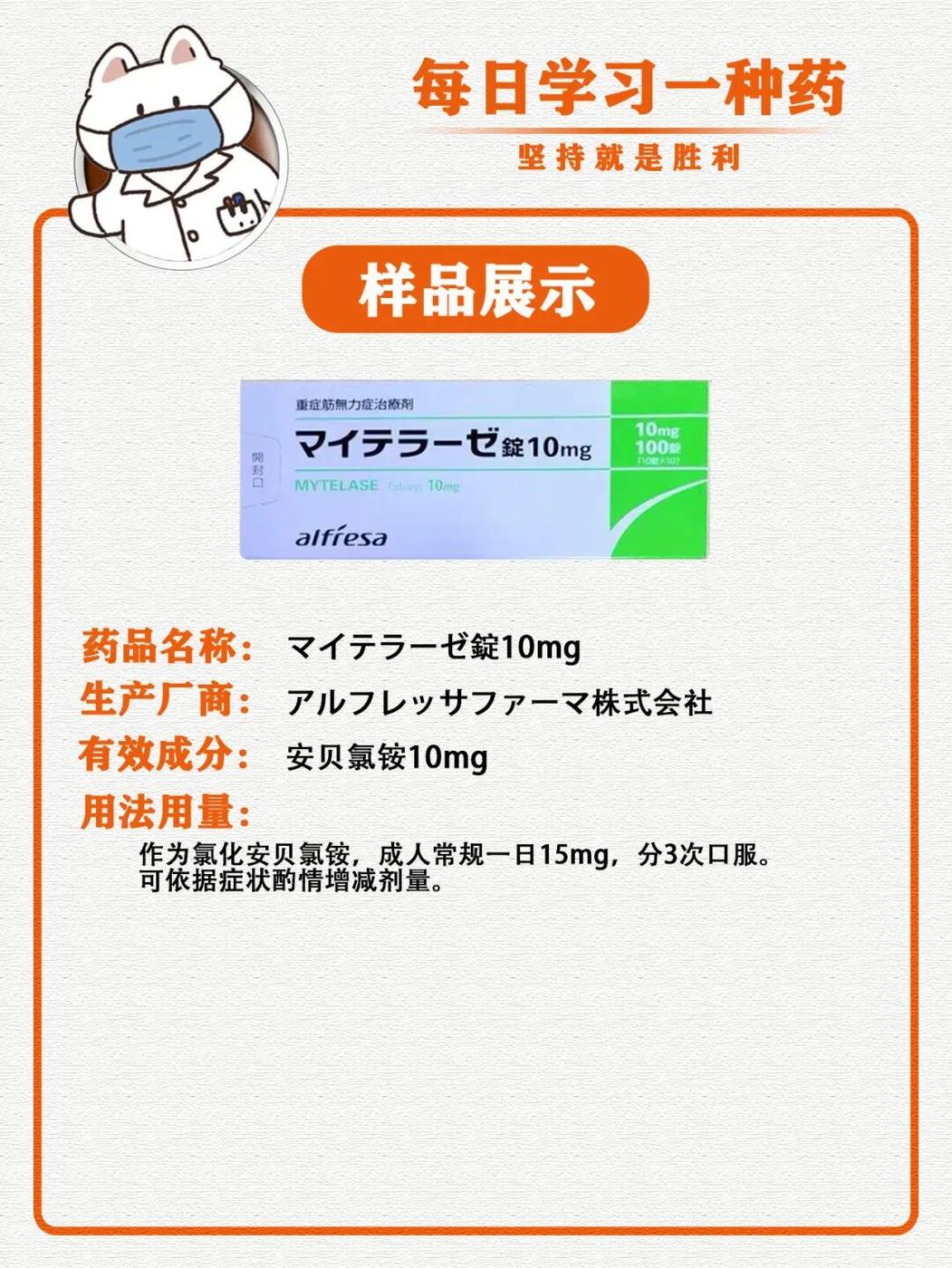
日本語原題:マイテラーゼ錠10mg

Published2026-06-06 09:40 FormTablet Content9 sections / 2 images
Ingredients / strength:
1 tablet contains 10mg ambenonium chloride (Japanese source).
English translation of the Japanese package insert is the main text; the Japanese original is shown alongside for verification. Use the language menu (top right) to read the page in another language. This site is for reference only — consult a doctor or pharmacist before use.
Section 1 · 01
English translation
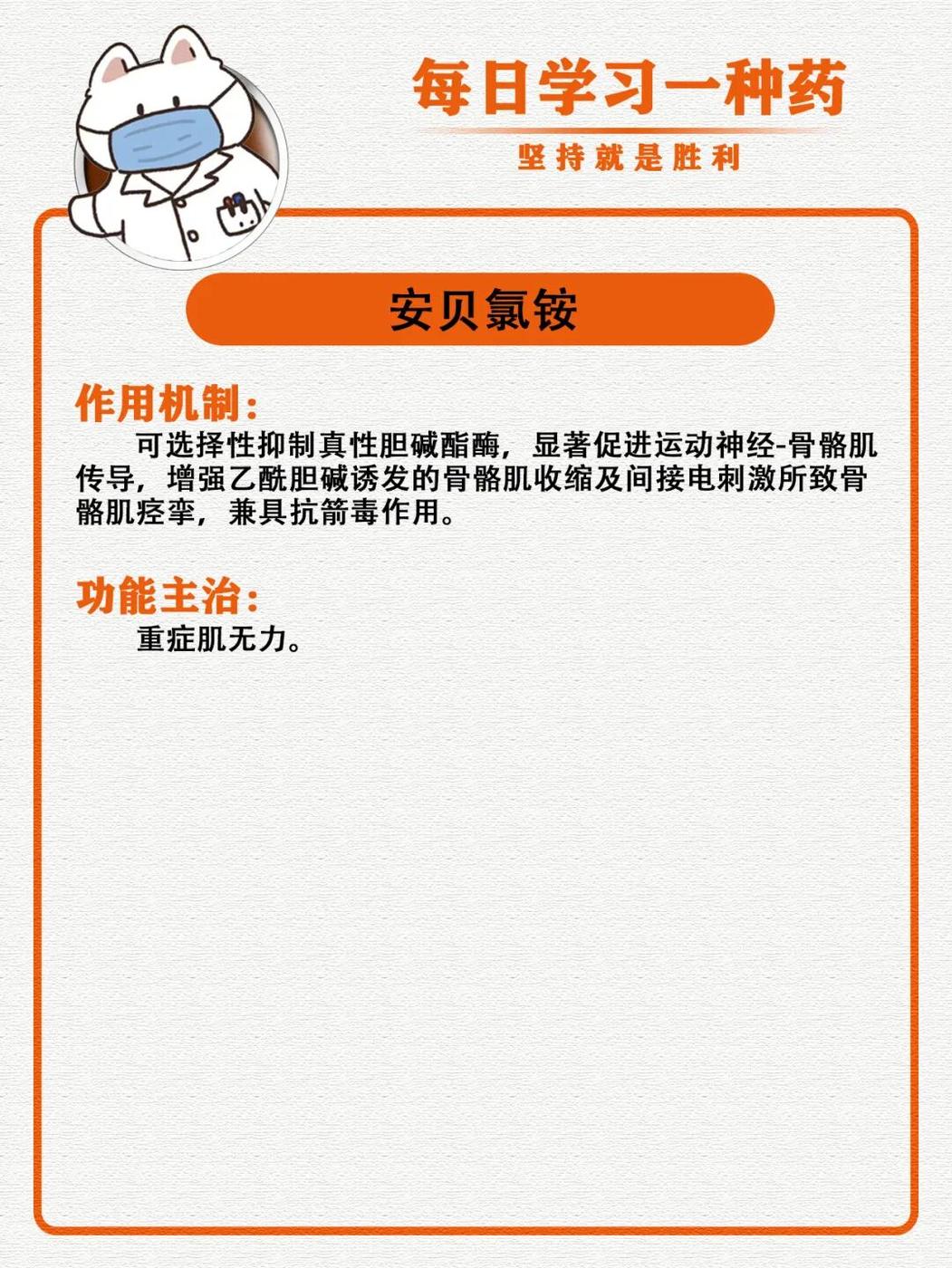
Feature Description It selectively suppresses true ChE. It exhibits a pronounced motor neuro-skeletal muscle transmission promotion effect, enhancing skeletal muscle contraction via acetylcholine and skeletal muscle spasm through indirect electrical stimulation. It also has anti-curaré effects.
Section 2 · 02
English translation
100 tablets [10 tablets (PTP packaging) ×10 blisters].
Section 3 · 03
English translation
Characteristics A white film coated lock with split lines.
Section 4 · 04
English translation
Ingredient Information Active ingredient: 1 tablet contains 10mg ambenonium chloride (Japanese powder). Additives: Calcium hydrogen phosphate hydrate, corn starch, lactose hydrate, refined white sugar, gelatin, gum arabic powder, magnesium stearate, ethyl cellulose.
Section 5 · 05
English translation
Myasthenia gravis.
Section 6 · 06
English translation
Dosage and Administration As ambenonium chloride, it is typically given orally in three divided doses of 15 mg per adult daily. Adjust the amount appropriately depending on symptoms.
Section 7 · 07
English translation
Notes 1. Sometimes severe worsening of muscle weakness symptoms, difficulty breathing, and swallowing difficulties (crease) may occur; in such cases, crises should be differentiated by clinical symptoms. If differentiation is difficult, administer 2 mg of edrohonium chloride intravenously to identify the type of crisis and perform the following procedures. (1) Cholinergic Crisis If symptoms such as nausea, vomiting, abdominal pain, diarrhea, sweating, excessive salivation, excessive airway secretion, bradycardia, miosis, or dyspnea occur, or if symptoms worsen or remain unchanged after edrohonium chloride administration, immediately discontinue administration of this drug and administer 0.5~1 mg of atropine sulfate hydrate (adjusted as appropriate according to the patient's symptoms) intravenously. Also, since respiratory failure can occur, in such cases, secure the airway and consider artificial ventilation. (2) Myasthenic Crisis If symptoms such as difficulty breathing, difficulty excreting saliva, cyanosis, or general weakness occur, or if symptoms improve after administration of edrohonium chloride, increase the dose of this drug.
Section 8 · 08
English translation
Side Effects 1. Cholinergic crisis (frequency unknown) 2. Other side effects (1) Respiratory system: Increased bronchial secretion. (2) Skeletal muscles: muscle spasms, fiber bundle contractures. (3) Digestive system: abdominal pain, diarrhea, nausea and vomiting, excessive salivation, abdominal discomfort, and stomach rumbling. (4) Circulatory system: increased palpitations, atrioventricular block, bradycardia. (5) Mental and nervous system: headache, dizziness. (6) Others: sweating, tearing, general fatigue (with anxiety), pupil constriction.
Section 9 · 09
English translation
taboo 1. Patients with a history of hypersensitivity to any component of this drug 2. Patients with organic obstruction of the digestive tract or urinary tract [may enhance gastrointestinal function and worsen symptoms. It may also cause urine reflux. ] 3. Patients with vagus nerve tonia [May increase vagus nerve tone. ] 4. Patients receiving depolarizing muscle relaxants (susamethonium chloride hydrate)

Source images

2 images

Need help sourcing Japanese medicines or OEM production?

💬