Cardiovascular · CARDIOVASCULAR

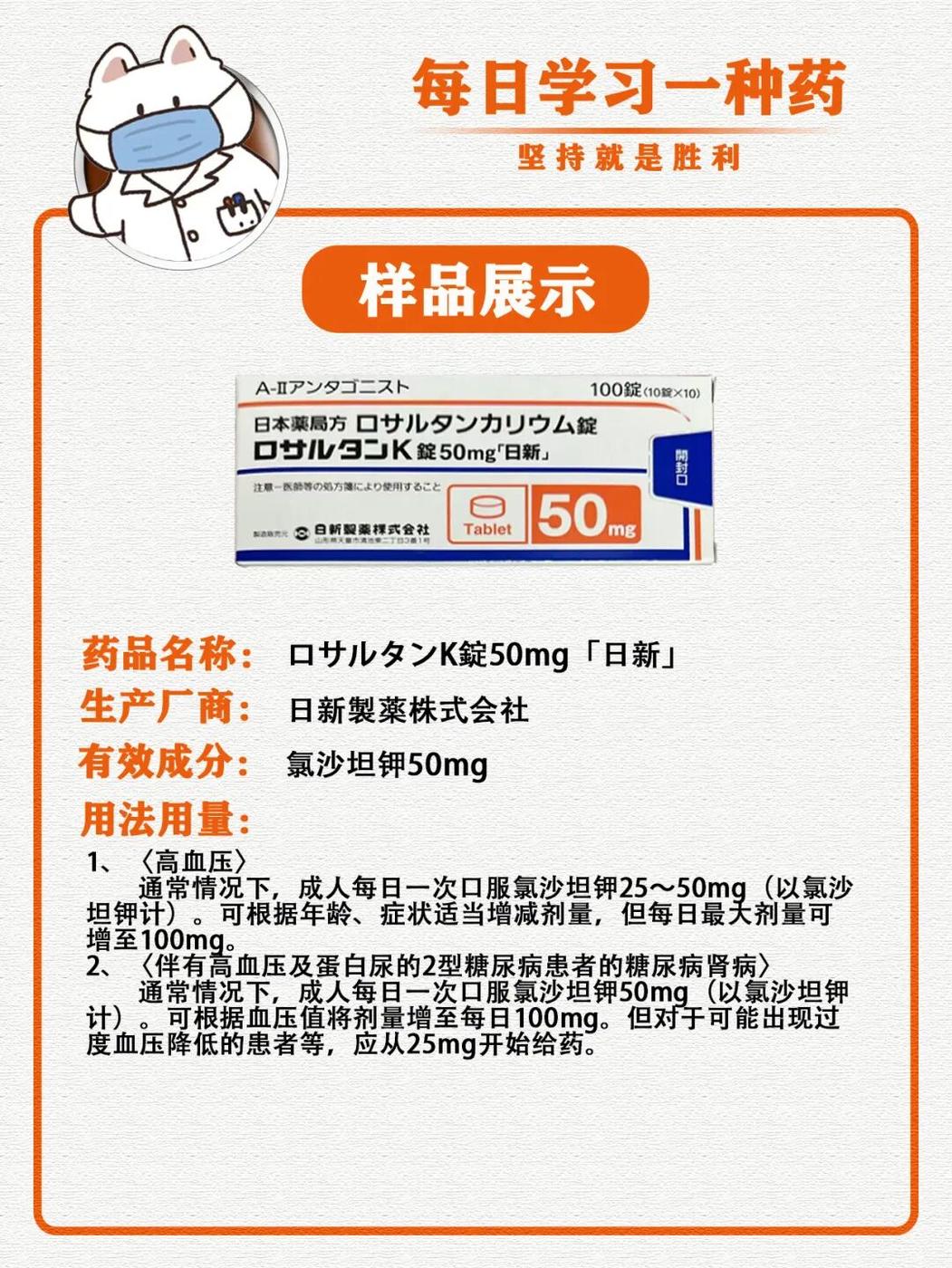
Losartan Potassium

日本語原題:ロサルタンK錠50mg「日新」

Published2026-06-10 12:08 Maker日新 FormTablet Content9 sections / 2 images
Ingredients / strength:
1 tablet contains 50mg of Rosartan Potassium from the Japanese Pharmacopoeia.
English translation of the Japanese package insert is the main text; the Japanese original is shown alongside for verification. Use the language menu (top right) to read the page in another language. This site is for reference only — consult a doctor or pharmacist before use.
Section 1 · 01
English translation
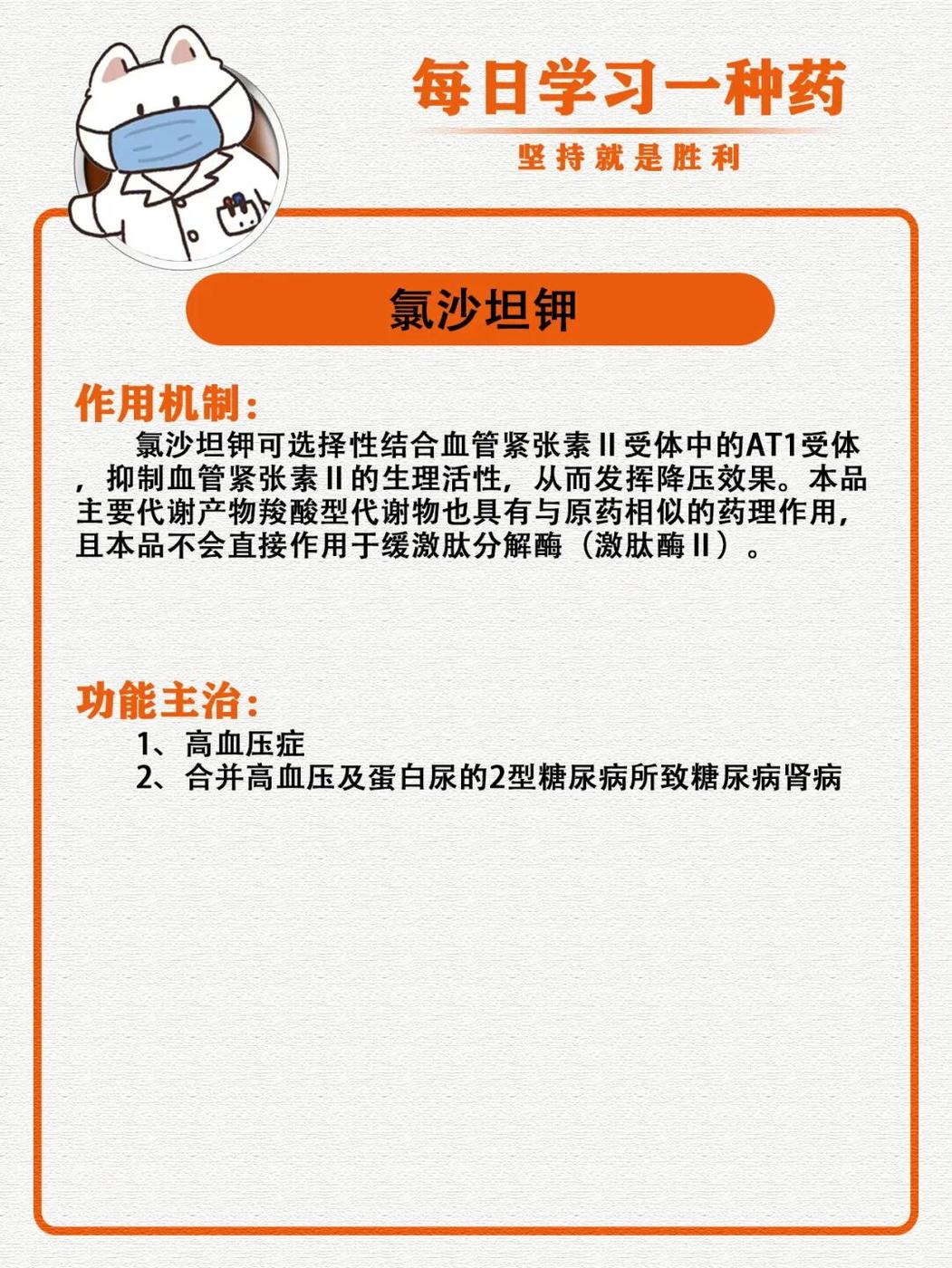
Feature Description Rosartan potassium selectively binds to the AT1 receptor, one of angiotensin II receptors, thereby inhibiting the physiological effects of angiotensin II and thereby exerting a blood pressure-lowering effect. The main metabolite of this drug, the carboxylic acid body, also exhibits similar effects to this drug. It does not directly act on the enzyme that degrades bradykinin (kininase II).
Section 2 · 02
English translation
100 tablets [10 tablets (aluminum-plastic blister packaging) ×10 blisters].
Section 3 · 03
English translation
Characteristics Film-coated tablets with a secant line in white~yellowish-white bands.
Section 4 · 04
English translation
Ingredient Information Active ingredient: 1 pill from the Chinese Japanese Pharmacopoeia, Rosartan Potassium 50mg. Additives: lactose hydrate, crystalline cellulose, partially alpha-starch, magnesium stearate, hypromellose, hydroxypropyl cellulose, macrogol, titanium oxide.
Section 5 · 05
English translation
Indications 1. Hypertension 2. Diabetic nephropathy in type 2 diabetes with hypertension and proteinuria
Section 6 · 06
English translation
Dosage and Administration 1. Hypertension Typically, adults receive 25~50 mg of rosartan potassium orally once daily. The dose may be adjusted appropriately depending on age and symptoms, but can be increased up to 100 mg per day. 2. "Diabetic nephropathy in type 2 diabetes with hypertension and proteinuria" Typically, adults receive 50 mg of rosartan potassium orally once daily. It can be increased up to 100 mg per day while monitoring blood pressure levels. However, for patients at risk of excessive blood pressure reduction, dosing should start from 25 mg.
Section 7 · 07
English translation
Notes 1. "Common Efficacy" (1) There is a risk of transient blood pressure drops (accompanied by shock symptoms, loss of consciousness, difficulty breathing, etc.), so regular blood pressure monitoring should be performed during administration (every 2 weeks at start, about once a month after stabilization). (2) Dizziness and unsteadiness caused by blood pressure-lowering may occur, so caution is advised when operating dangerous machinery such as working at heights or driving a car. (3) It is desirable not to administer for 24 hours before surgery. Patients receiving angiotensin II receptor antagonists may experience severe hypotension due to the inhibitory effects of the renin-angiotensin system during anesthesia and surgery. (4) There have been reports of rare severe liver damage such as hepatitis occurring during administration of angiotensin II receptor antagonists containing this drug. Conduct thorough observation such as liver function tests, and if abnormalities are detected, take appropriate measures such as discontinuing administration. 2. "Diabetic nephropathy in type 2 diabetes with hypertension and proteinuria" (1) Since anemia is more likely to occur, regular blood tests (at start of administration: every two weeks, after stabilization: about once a month) should be carefully monitored during administration. (2) Since serum potassium and serum creatinine are likely to rise, regular monitoring of serum potassium and serum creatinine levels should be conducted during administration (at start of administration: every 2 weeks, after stabilization: about once a month).
Section 8 · 08
English translation
Side Effects 1. Anaphylaxis (frequency unknown) Discomfort, abnormal sensations in the mouth, sweating, hives, difficulty breathing, generalized flushing, and edema may occur. 2. Angioedema (frequency unknown) Swelling may appear on the face, lips, pharynx, tongue, and other areas. Additionally, intestinal angioedema accompanied by abdominal pain, nausea, vomiting, and diarrhea may also occur. 3. Acute hepatitis or fulminant hepatitis (both unknown frequency) 4. Renal failure (frequency unknown) 5. Shock, fainting, loss of consciousness (frequency unknown) If symptoms such as coldness, vomiting, or loss of consciousness appear, take appropriate treatment immediately. 6. Rhabdomyolysis (frequency unknown) If rhabdomyolysis characterized by muscle pain, weakness, elevated CK (Cough Fever Syndrome), and elevated myoglobin in blood and urine appears, discontinue administration and take appropriate treatment. Also, be cautious of the onset of acute kidney damage caused by rhabdomyolysis. 7. Hyperkalemia (frequency unknown) 8. Arrhythmia (frequency unknown) Arrhythmias such as ventricular extrasystoles and atrial fibrillation may occur. 9. Pancytopenia, leukopenia, thrombocytopenia (frequency unknown) 10. Hypoglycemia (frequency unknown) If weakness, hunger, cold sweats, hand tremors, decreased concentration, convulsions, or impaired consciousness appear, discontinue administration and take appropriate measures. It is more likely to appear in patients undergoing diabetes treatment. 11. Hyponatremia (frequency unknown) Hyponatremia accompanied by fatigue, loss of appetite, nausea, vomiting, convulsions, and impaired consciousness may occur. 12. Other side effects (1) Neuropsychiatric system: headache, dizziness, insomnia, floating sensation, tinnitus, drowsiness. (2) Cardiovascular system: hypotension, orthostatic hypotension, chest pain, dyarrhythmia (such as tachycardia), palpitations. (3) Digestive system: angular stomatitis, vomiting/nausea, stomach discomfort, gastric ulcers, stomatitis, diarrhea, dry mouth. (4) Liver: liver dysfunction (elevated AST, elevated ALT, elevated LDH, etc.), jaundice. (5) Kidneys: increased BUN, increased creatinine. (6) Skin: rash, itching, urticaria, erythema multiforme, photosensitivity, erythema, erythema. (7) Blood: reduced red blood cells, decreased hematocrit, eosinophilia, anemia. (8) Others: hot flashes, fatigue, weakness/fatigue, edema, muscle pain, elevated total cholesterol, elevated CK, elevated blood uric acid, cough, fever, taste disturbances, numbness, ocular symptoms (blurredness, discomfort, etc.), joint pain, muscle spasms, gynecomastia, erectile dysfunction.
Section 9 · 09
English translation
taboo 1. Patients with a history of hypersensitivity to any component of this drug 2. Pregnant women or women who may be pregnant 3. Patients with severe liver impairment 4. Diabetic patients receiving aliskilene (except for those whose blood pressure control remains severely poor despite other antihypertensive treatments)

Source images

2 images

Need help sourcing Japanese medicines or OEM production?

💬