Cardiovascular · CARDIOVASCULAR

Bevantolol Hydrochloride

日本語原題:カルバン錠50/100

Published2026-06-29 09:34 FormTablet Content9 sections / 2 images
English translation of the Japanese package insert is the main text; the Japanese original is shown alongside for verification. Use the language menu (top right) to read the page in another language. This site is for reference only — consult a doctor or pharmacist before use.
Section 1 · 01
English translation
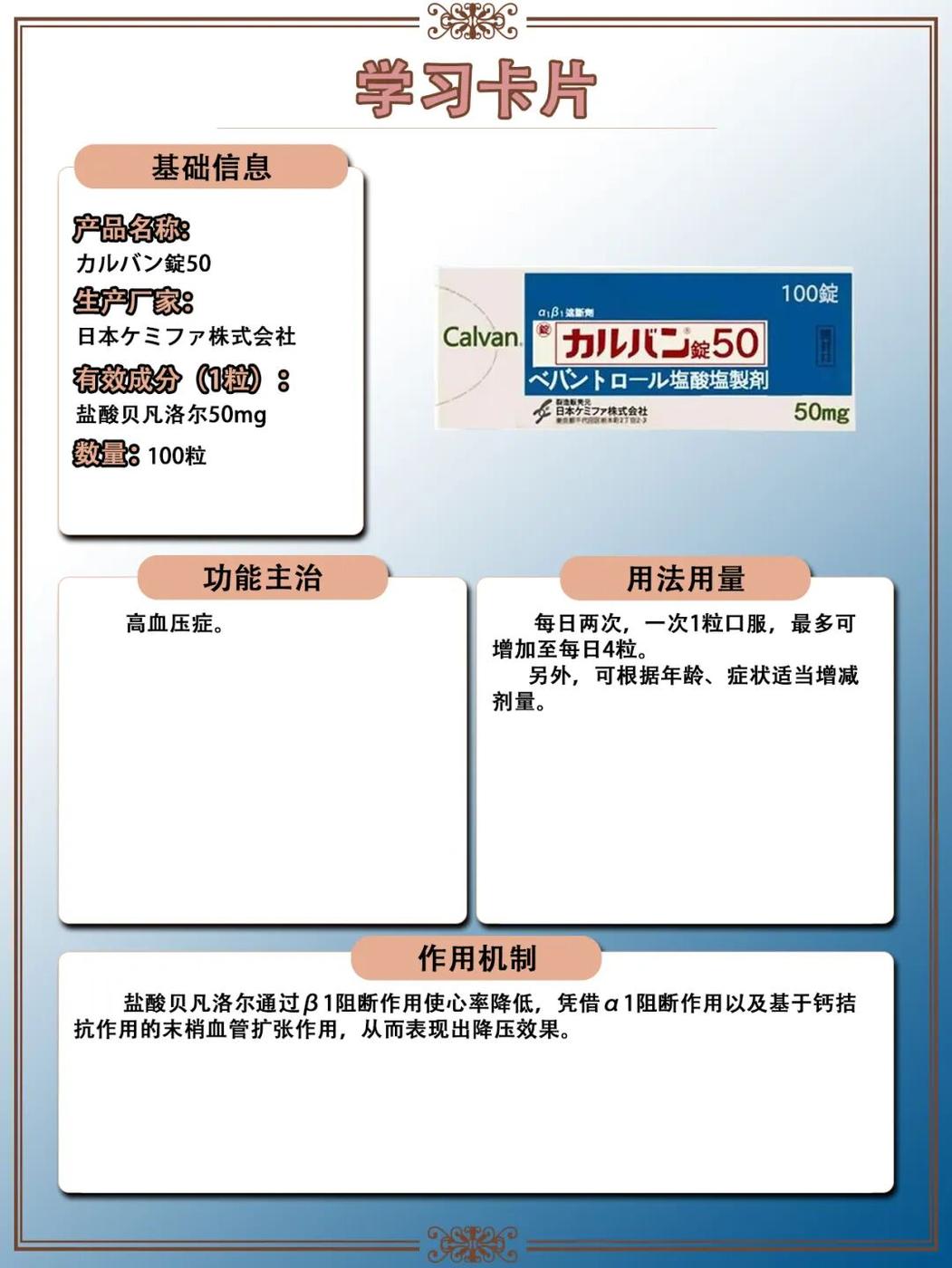
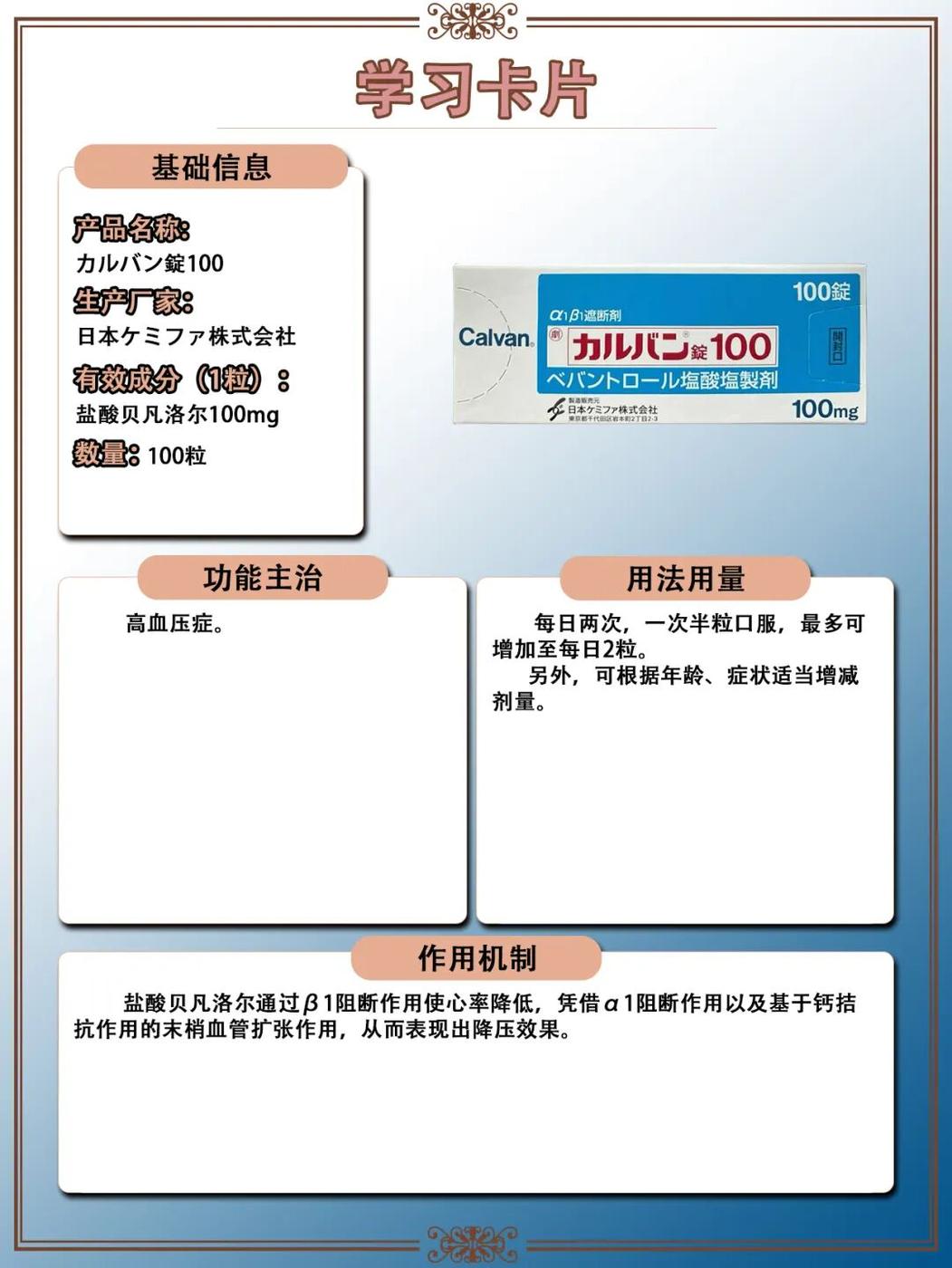
Feature Description Bevantrol hydrochloride exhibits antihypertensive effects such as heart rate reduction due to β1 blockade, peripheral vasodilation effects based on α1 blockade and Ca antagonism.
Section 2 · 02
English translation
100 tablets [10 tablets (aluminum-plastic blister packaging) ×10 boards].
Section 3 · 03
English translation
Characteristics 1. Calvin Tablets 50 White film-coated locks. 2. Calvin Tablets 100 A white film-coated lock with split lines.
Section 4 · 04
English translation
Ingredient Information 1. Calvin Tablets 50 (1) Active ingredient (per tablet): Bevantrol hydrochloride 50.0mg. (2) Additives: lactose hydrate, crystalline cellulose, carmellose, hydroxypropyl cellulose, hydrogenated oil, magnesium stearate, hypromellose, macrogol 400, titanium dioxide, carnauba oil. 2. Calvin Tablets 100 (1) Active ingredient (per tablet): Bevantrol hydrochloride 100.0mg. (2) Additives: lactose hydrate, crystalline cellulose, carmelose, hydroxypropyl cellulose, hydrogenated oil, magnesium stearate, hypromellose, macrogol 6000, titanium oxide, carnauba lub.
Section 5 · 05
English translation
Hypertension.
Section 6 · 06
English translation
Dosage and Administration Typically, adults are given 100 mg of bevantrol hydrochloride orally divided into two doses per day, and if efficacy is insufficient, the dose can be increased up to 200 mg per day. Adjust appropriately according to age and symptoms.
Section 7 · 07
English translation
Notes 1. If the administration is long-term, perform regular cardiac function tests (pulse, blood pressure, ECG, X-rays, etc.). If symptoms of bradycardia or hypotension appear, reduce the dose or discontinue administration. Also, use atropine sulfate hydrate as needed. Also, pay attention to liver function, kidney function, blood profile, and other factors. 2. In angina patients using similar compounds (propranolol hydrochloride), sudden discontinuation of administration has been reported to worsen symptoms or cause myocardial embolism; if discontinuation is necessary, dose reduction should be gradually followed by careful observation. Also, patients should be careful not to stop taking medication without a doctor's guidance. Similar precautions should be observed especially for the elderly. 3. It is desirable not to administer for 48 hours before surgery. 4. Dizziness and unsteadiness may occur; patients receiving this drug (especially in the early stages) should be cautious when operating dangerous machinery such as driving a vehicle.
Section 8 · 08
English translation
Side Effects 1. Heart failure (less than 0.1%), atrioventricular block (less than 1%), sinus dysfunction (frequency unknown) Heart failure, atrioventricular block, and sinus dysfunction (such as marked sinus bradycardia, sinoatrial block, etc.) may occur. 2. Asthma attacks and difficulty breathing (both unknown frequencies) Since asthma attacks may be triggered or worsened, if such symptoms occur, discontinue administration of this drug and take appropriate measures. 3. Neuropsychiatric System Dizziness, headache, heaviness in the head, drowsiness, insomnia, dizziness, and anxiety. 4. Kidneys BUN increased, creatinine increased. 5. Liver Liver dysfunction (elevated ALT, elevated AST, etc.). 6. Circulator Bradycardia, sinus bradycardia, palpitations, increased cardiothoracic ratio, low blood pressure, chest pain, syncope. 7. Respirators Cough, shortness of breath, wheezing. 8. Digestive system Nausea, diarrhea, constipation, dry mouth, nausea, abdominal bloating, loss of appetite, abdominal discomfort, vomiting, stomach heaviness, and oral irritation. 9. Allergy symptoms Rash, eczema, itching. 10. Eyes Photopiopic-like symptoms. 11. Urinary System Difficulty urinating, frequent urination, and scanty urination. 12. Others Elevated uric acid, elevated total cholesterol, edema, fatigue, increased CK, elevated potassium, easy fatigue, weakness in the lower limbs, facial flushing, decreased tear secretion.
Section 9 · 09
English translation
taboo 1. Patients with diabetic ketoacidosis or metabolic acidosis [may promote the manifestation of decreased cardiac contractility, peripheral arterial dilation, and hypotension due to acidosis. ]。 2. Patients with cardiogenic shock [The cardiac function suppression effect of this drug may worsen symptoms. ]。 3. Patients with congestive heart failure [The cardiac function suppression effect of this drug may worsen symptoms. ]。 4. Patients with right heart failure due to pulmonary hypertension [The cardiac function suppression effect of this drug may worsen symptoms. ]。 5. Patients with severe bradycardia (severe sinus bradycardia), atrioventricular block (grades II and III), or sinoatrial block [The cardiac function suppression effect of this drug may worsen symptoms. ]。 6. Pregnant women or women who may be pregnant [animal studies (rats) have reported fetal weight loss. ]。 7. Patients with untreated pheochromocytoma or paraganglioma.

Source images

2 images

Need help sourcing Japanese medicines or OEM production?

💬