Digestive · DIGESTIVE

Mesalazine

日本語原題:アサコール錠400mg

Published2026-08-07 10:22 FormTablet Content9 sections / 1 images
Ingredients / strength:
1 Chūnichi Domestique Mesalazine 400mg.
English translation of the Japanese package insert is the main text; the Japanese original is shown alongside for verification. Use the language menu (top right) to read the page in another language. This site is for reference only — consult a doctor or pharmacist before use.
Section 1 · 01
English translation
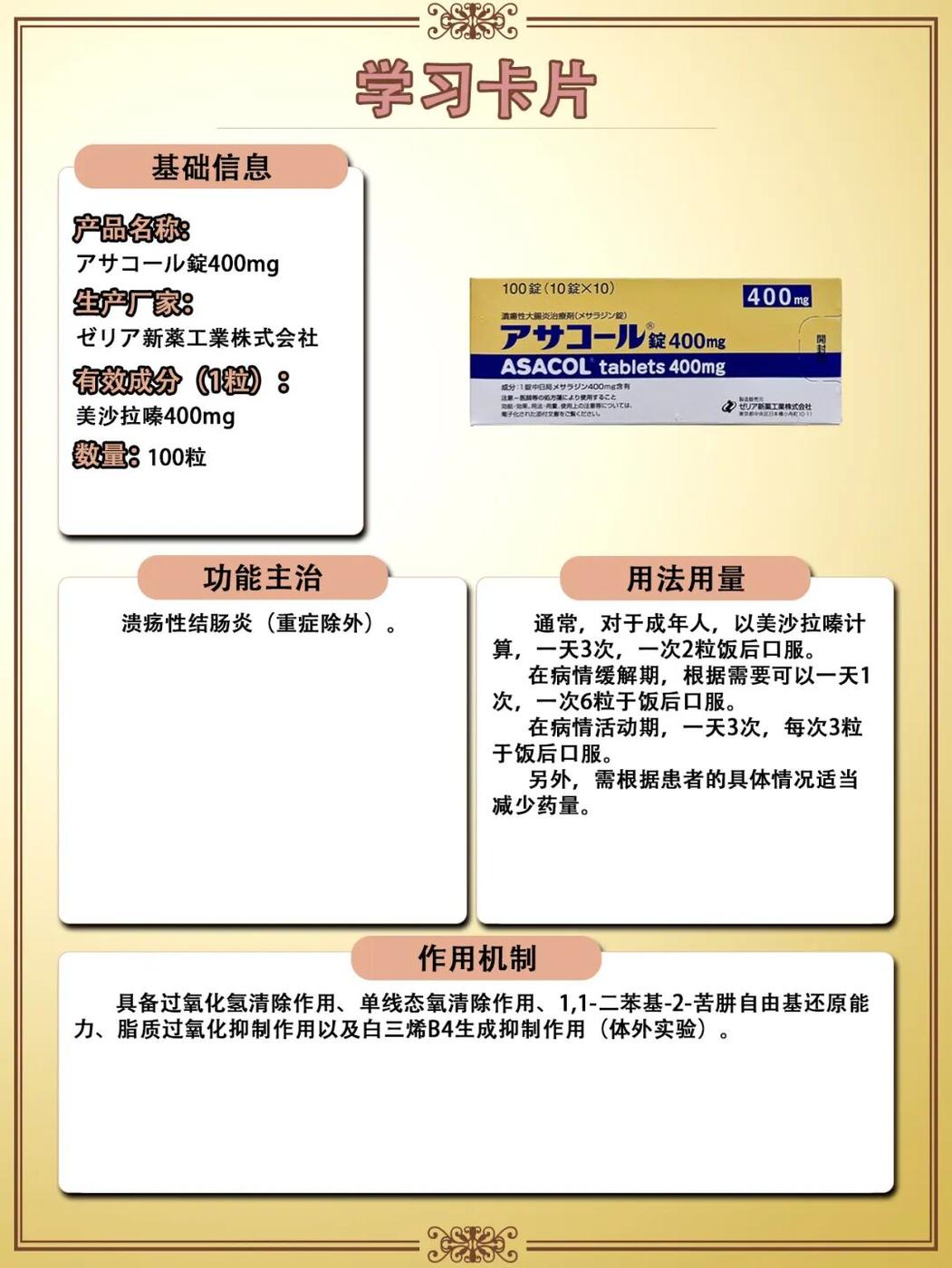
Feature Description It exhibited hydrogen peroxide elimination, singlet oxygen scavenging, 1,1-diphenyl-2-picylhydradyl radical reduction ability, lipid peroxidation inhibition, and leukotriene B4 production suppression (in vitro).
Section 2 · 02
English translation
PTP packaging: 100 tablets (10 tablets×10).
Section 3 · 03
English translation
Characteristics Tapered reddish~brown pH-dependent release film-coated tablets.
Section 4 · 04
English translation
Ingredient Information Active ingredient: 1 Chūnichi Domestique Mesalazine 400mg. Additives: lactose hydrate, sodium starch glycholate, magnesium stearate, talc, povidone, methacrylate copolymer S, triethyl citrate, yellow ferric oxide, ferric trioxide, macrogol 6000EP.
Section 5 · 05
English translation
Indications Ulcerative colitis (except severe cases).
Section 6 · 06
English translation
Dosage and Administration Typically, adults receive 2,400 mg of mesalazine orally after meals, divided into three doses, but during remission, 2,400 mg can be administered orally once daily after meals as needed. During the active phase, 3,600 mg per day is administered orally after meals, divided into three doses. Dose reduction is adjusted as needed depending on the patient's condition.
Section 7 · 07
English translation
Feature Description 1. Nephrotic syndrome and interstitial nephritis have been reported, so monitor the patient's condition thoroughly during administration, including kidney function tests. 2. Since hepatitis, liver dysfunction, and jaundice have been reported, monitor liver function such as AST and ALT during administration to closely monitor the patient's condition. 3. Since aplastic anemia, pancytopenia, agranulocytosis, etc., have been reported, patients should be closely monitored during administration, including blood tests. 4. Since pancreatitis has been reported, perform serum amylase tests during administration and closely monitor the patient's condition. 5. Hypersensitivity symptoms (fever, abdominal pain, diarrhea, eosinophilia, etc.) may occur with mesaladin, and ulcerative colitis may worsen. If abnormalities are observed, appropriate measures such as dose reduction or discontinuation should be taken.
Section 8 · 08
English translation
Side Effects 1. Aplastic anemia, pancytopenia, agranulocytosis, leukopenia, neutropenia, thrombocytopenia (all frequency unknown) 2. Myocarditis, pericarditis, pleurisy (all unknown frequency) If chest pain, ECG abnormalities, pleural effusion, etc. are observed, appropriate measures such as discontinuing administration should be taken. 3. Interstitial lung disease (0.1%) Interstitial lung diseases (such as interstitial pneumonia and eosinophilic pneumonia) may occur, so if difficulty breathing, chest pain, or coughing occurs, appropriate measures such as discontinuing administration should be taken. 4. Pancreatitis (frequency unknown) Acute pancreatitis may occur. 5. Interstitial nephritis, nephrotic syndrome, renal failure (all of unknown frequency) 6. Hepatitis, liver dysfunction, jaundice (all unknown frequency) Hepatitis, AST, ALT, liver dysfunction accompanied by elevated γ-GTP, and jaundice may occur. 7. Toxic Epidermal Necrolysis (TEN) (frequency unknown), Stevens-Johnson syndrome (frequency unknown) 8. Drug-induced hypersensitivity syndrome (frequency unknown) Early symptoms include rash and fever, followed by liver dysfunction, lymphadenopathy, increased white blood cells, eosinophilia, and the appearance of atypical lymphocytes, resulting in delayed, severe hypersensitivity symptoms. Note that it often involves reactivation of viruses such as human herpesvirus 6 (HHV-6), and symptoms such as rash, fever, and liver dysfunction may recur or persist even after discontinuation, so caution is advised. 9. Other side effects (1) Hypersensitivity: rash, hives, itching (2) Blood: eosinophil increase, leukopenia, monocytosis, anemia (3) Gastrointestinal: abdominal pain, diarrhea, abdominal bloating, nausea, indigestion, bloating, increased blood amylase, vomiting, increased lipase, bloody stools, bleeding (4) Liver: increased bilirubin, increased AST, increased ALT, increased γ-GTP, increased Al-P, increased LDH (5) Kidneys: increased urinary NAG, increased BUN, increased blood creatinine, decreased creatinine clearance (6) Others: increased CRP, headache, dizziness, joint pain, illusions (numbness, etc.), fever, tinnitus, muscle pain, weight loss, alopecia, lupus-like syndrome, increased erythrocyte sedimentation rate, fatigue.
Section 9 · 09
English translation
taboo 1. Patients with a history of hypersensitivity to any component of this drug 2. Patients with a history of hypersensitivity to salicylates [there is a risk of developing cross-allergy.] ] 3. Patients with severe kidney impairment 4. Patients with severe liver impairment

Source images

1 images

Need help sourcing Japanese medicines or OEM production?

💬