Digestive · DIGESTIVE

Icosapent ethyl

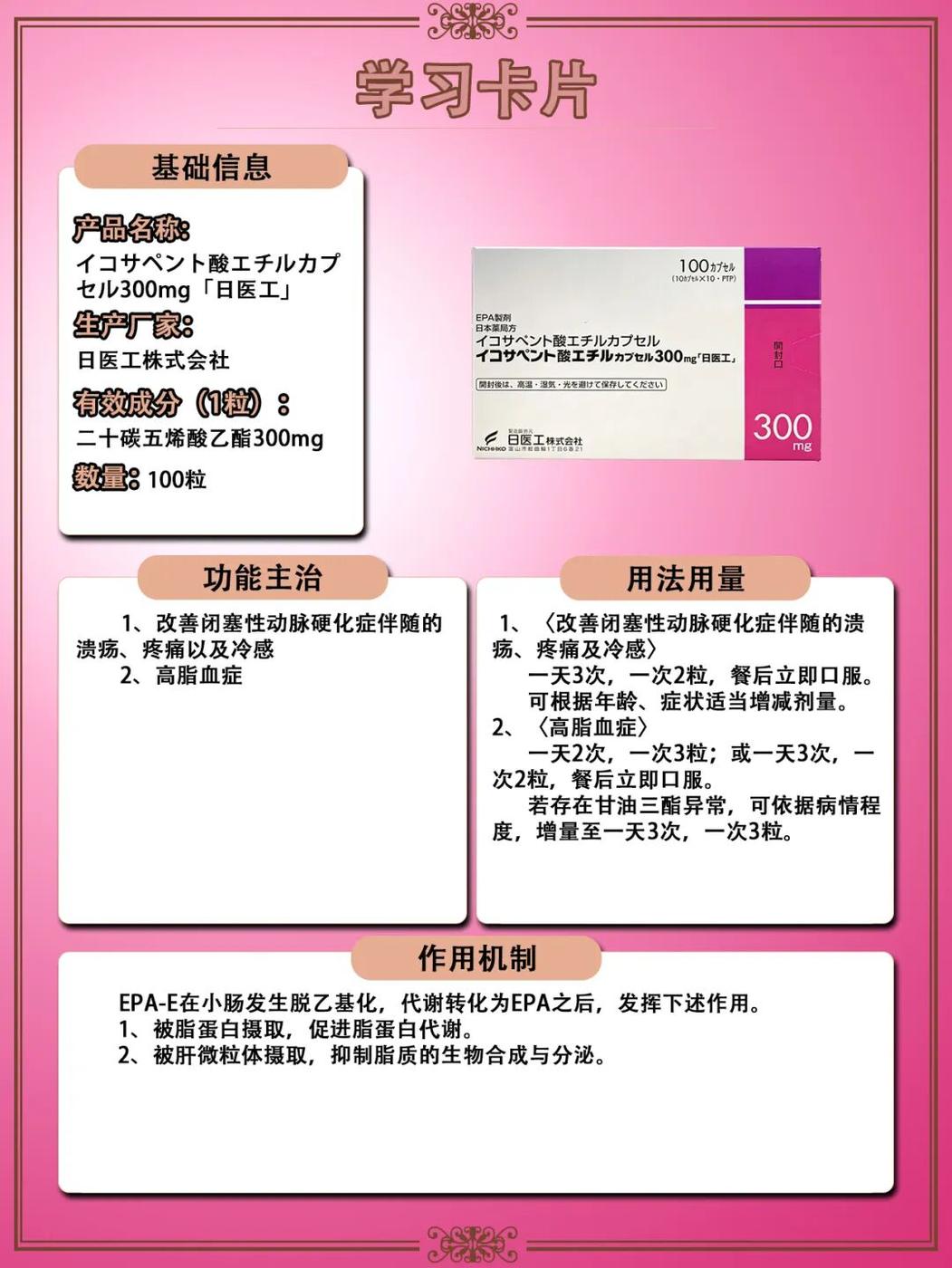
日本語原題:イコサペント酸エチルカプセル300mg「日医工」

Published2026-08-13 15:26 Maker日医工 FormCapsule Content9 sections / 1 images
Ingredients / strength:
Each capsule contains 300mg of ethyl icosapentate.
English translation of the Japanese package insert is the main text; the Japanese original is shown alongside for verification. Use the language menu (top right) to read the page in another language. This site is for reference only — consult a doctor or pharmacist before use.
Section 1 · 01
English translation
Feature Description EPA-E undergoes deethylation in the small intestine and is metabolized to EPA, where it exhibits the following effects. 1. Absorbed by lipoproteins and promoting their metabolism. 2. Taken up by liver microsomes, it suppresses lipid biosynthesis and secretion.
Section 2 · 02
English translation
Specifications 100 capsules [10 capsules×10; PTP].
Section 3 · 03
English translation
Characteristics A pale yellow, transparent soft capsule.
Section 4 · 04
English translation
Ingredient Information Active ingredient: 300mg of ethyl icosapentate per capsule. Additives: Tocopherol capsule body: squarified gelatin, gelatin, concentrated glycerin, ethyl palaoxybenzoate, propyl paloxybenzoate.
Section 5 · 05
English translation
Indications 1. Improvement of ulcers, pain, and coldness associated with arteriosclerosis obliterans 2. Hyperlipidemia
Section 6 · 06
English translation
Dosage and Administration 1. 〈Improvement of ulcers, pain, and coldness associated with occlusive arteriosclerosis〉 As ethyl icosapentate, it is typically administered orally for adults at 600 mg (2 capsules) three times a day, immediately after each meal. Adjustments may be adjusted appropriately depending on age and symptoms. 2. "Hyperlipidemia" As ethyl icosapentate, adults are typically given 900 mg (3 capsules) twice daily or 600 mg (2 capsules) three times daily immediately after meals. However, if triglyceride abnormalities occur, the dose can be increased to 900 mg (3 capsules) per dose, up to three times a day, depending on the severity.
Section 7 · 07
English translation
Notes 1. 〈Improvement of ulcers, pain, and coldness associated with occlusive arteriosclerosis〉 During treatment, carefully monitor the progression, and if this drug is ineffective, discontinue administration and switch to another therapy. It is also advisable to perform regular blood tests during administration of this drug. 2. "Hyperlipidemia" (1) Dietary therapy, which is fundamental for treating hyperlipidemia, should be implemented in advance, and further considering exercise therapy and reducing risk factors for ischemic heart disease such as hypertension and smoking. (2) Regularly monitor blood lipid levels during administration, and discontinue administration if no response to treatment is observed.
Section 8 · 08
English translation
Side Effects 1. Liver dysfunction (frequency unknown), jaundice (frequency unknown) Liver dysfunction accompanied by elevated levels of AST, ALT, AL-P, γ-GTP, LDH, bilirubin, etc., and jaundice may occur. 2. Atrial fibrillation (frequency unknown), atrial tasting (frequency unknown) Reports indicate an increased risk of atrial fibrillation or atrial flutter requiring hospitalization. Additionally, domestic and international clinical trials of omega-3 fatty acids containing ethyl icosapentate have reported an increased risk of atrial fibrillation. 3. Other side effects (1) Hypersensitivity: rash, itching, etc. (2) Bleeding tendency: subcutaneous hemorrhage, hematuria, gum bleeding, fundus bleeding, nosebleeds, gastrointestinal bleeding, etc. (3) Blood: anemia, etc. (4) Digestive system: nausea, heartburn, abdominal discomfort, diarrhea, constipation, abdominal bloating, abdominal pain, vomiting, loss of appetite, stomatitis, dry mouth, bloating, etc. (5) Liver: Liver dysfunction such as elevated AST, ALT, Al-P, γ-GTP, LDH, and bilirubin. (6) Kidneys: Increased BUN and creatinine levels. (7) Respirator: cough, difficulty breathing. (8) Neuropsychiatric system: headache, heaviness in the head, dizziness, numbness, dizziness, drowsiness, insomnia. (9) Musculoskeletal system: joint pain, muscle pain, limb pain, muscle cramps (such as cramps). (10) Others: edema, increased uric acid, increased CK, palpitations, facial flushing, flushing, fever, frequent urination, general fatigue, increased blood pressure, gynecomastia, tinnitus, sweating, acne.
Section 9 · 09
English translation
taboo 1. Patients with bleeding (hemophilia, capillary fragility, gastrointestinal ulcers, urinary tract bleeding, hemoptysis, vitreous hemorrhage, etc.) [There is a risk of difficulty in hemostasis. ] 2. Patients receiving mifepristone or misoprostol

Source images

1 images

Need help sourcing Japanese medicines or OEM production?

💬